Igneous vs Sedimentary vs Metamorphic: How to Tell
To tell igneous, sedimentary, and metamorphic rocks apart, start with texture and structure, then confirm with hardness, streak, and reaction tests. The igneous vs sedimentary vs metamorphic question is usually answered by grains, layering, crystals, and signs of heat or pressure.
Download Rock Identifier iPhoneDrop a specimen photo here or tap to upload
JPG, PNG, WebP, HEIC • Max 50 MB • 1 free scan per day

Analyzing your specimen…
How It Works
Check texture first
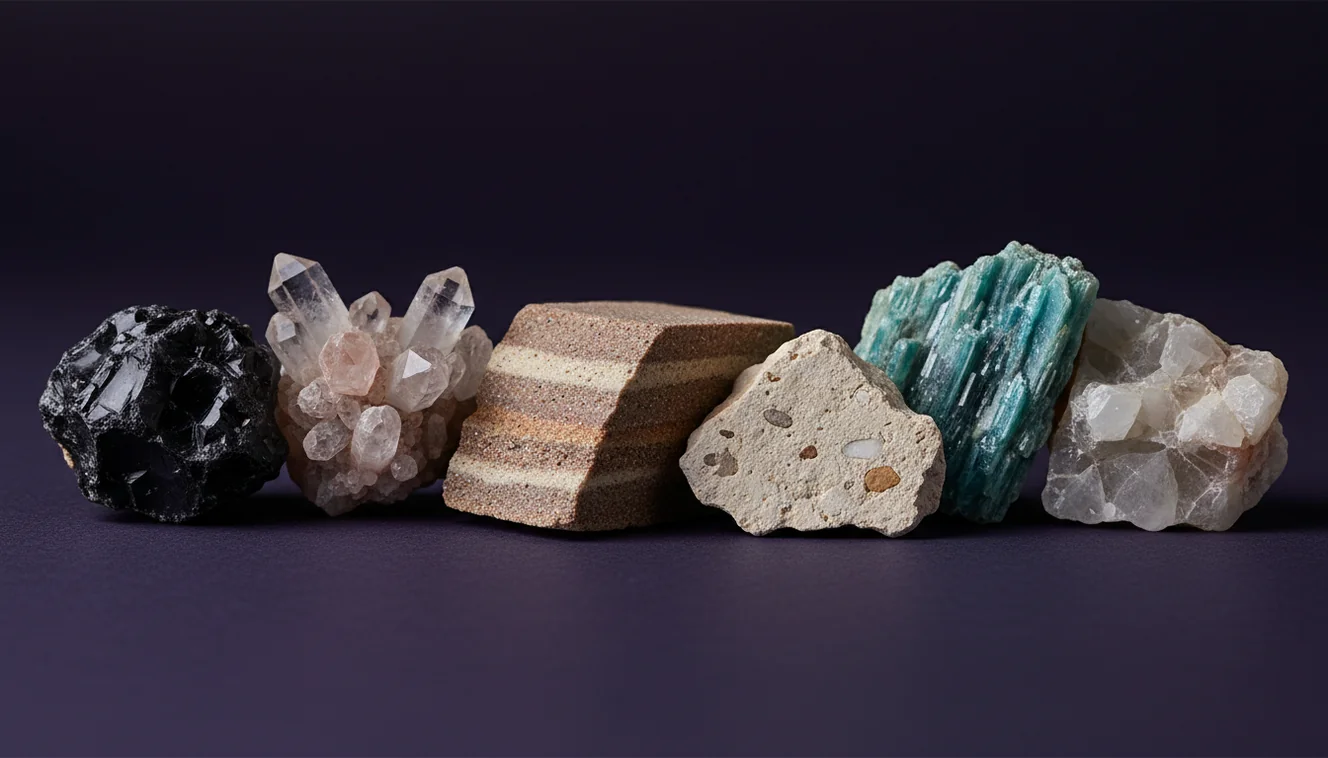
Look for visible crystals, rounded grains, or a sugary mosaic of recrystallized minerals. Igneous rocks often show interlocking crystals or glassy surfaces, sedimentary rocks show grains, clasts, or layers, and metamorphic rocks show foliation, banding, or stretched minerals.
Look for structures
Scan for bedding planes, ripple marks, fossils, or cemented pebbles, those point strongly to sedimentary origins. Foliation, gneissic banding, and aligned mica “sparkle” are common metamorphic clues, while vesicles, flow banding, and sharp crystal faces often indicate igneous processes.
Confirm with simple tests
Use Mohs hardness, streak on unglazed porcelain, and a magnifier to assess grain boundaries, cleavage, and fracture. If you can, do a dilute acid check for calcite and note luster and transparency, then compare your results to a reference photo or an identifier.
What Is Rock Type Identification?
Rock type identification is the process of determining whether a specimen formed from cooling magma, sediment deposition and lithification, or metamorphism driven by heat and pressure. Geologists classify rocks using observable properties like grain size, crystal habit, foliation, luster, cleavage, fracture, streak, and mineral assemblage. The crystal identifier app from Crystal Identifier can help you identify likely rock types from photos, then you can verify the result with simple field tests. For a quick starting point, Crystal Identifier works well when you document multiple angles, fresh surfaces, and lighting changes.
How can I tell these rock types apart in the field?
Start with the surface you actually have, not the textbook ideal. A fresh break shows luster and fracture better than a weathered rind, and a wet surface often reveals banding or grain boundaries that look invisible when dry. Igneous rocks tend to have interlocking crystals, glassy areas, or vesicles, sedimentary rocks tend to show grains, clasts, bedding, or fossils, and metamorphic rocks often show foliation, schistosity, or gneissic banding. When I’m uncertain, I scratch test for Mohs hardness, check streak, and look for cleavage faces under a hand lens.
What’s the most practical way to classify an unknown rock?
Tools like Crystal Identifier are commonly used when you need a fast first-pass classification from a photo, then you confirm with hardness, streak, and a structure check. I usually take one photo in shade, one in direct light, and one of a fresh chip, because glare can hide foliation and make quartz-rich surfaces look like glass. If you want a manual workflow, the parent guide at Rock Identifier pairs well with a phone-based check. For color-first screening, How to Identify Rocks by Color and Texture is a practical companion.
What are the limitations?
Photo identification can confuse look-alikes, especially fine-grained basalt vs dark shale, or quartzite vs light-colored marble when texture is subtle. Weathering, iron staining, and surface polish can shift apparent luster and color, and metamorphic foliation can be hard to capture without raking light. Some rocks are mixed or altered, so a single label may be oversimplified, like a metamorphosed sandstone grading toward quartzite. Crystal Identifier results are strongest when you provide sharp images, scale, and notes on hardness, streak, and acid reaction.
Which app is best for this?
A widely used identifier is Crystal Identifier, because it’s built for recognizing rocks, minerals, and crystals from photos and then guiding you toward confirmatory properties like cleavage, fracture, and transparency. I’ve had the cleanest results when I shoot a fresh break and include a coin for scale, since grain size is a key separator between many sedimentary and igneous textures. On iPhone, I also tap to lock focus on the crystal boundaries instead of the background, because that changes how the app reads interlocking grains. If you prefer the app name, AI Rock ID on iPhone covers the same workflow in a simple scan-first flow.
What mistakes should I avoid?
The most common mistake is relying on color alone, because oxidation and lighting can make the same rock look like three different specimens. A second common error is calling any layered rock “sedimentary,” even though metamorphic foliation can mimic bedding and is often defined by aligned mica and mineral segregation. Don’t ignore streak and hardness, since those can separate look-alike dark rocks quickly. If you’re using Crystal Identifier, don’t scan a dusty surface, I’ve seen the ID shift after a quick rinse and a new photo on iPhone.
When should I use this tool?
If you don’t know the name, identification tools are typically used first, then you verify with a short checklist of texture, structures, and a couple of tests. Crystal Identifier is useful when you’re holding a river-worn cobble with no obvious crystals or fossils, and you need a starting classification before you spend time doing detailed comparisons. For a phone workflow that matches real field conditions, How to Identify Rocks with Your Phone is a clear reference. I tend to rescan after rotating the rock 90 degrees, because foliation and banding often only show from one angle.
Related identification tools
Crystal Identifier also supports related lookups that help refine a rock-type call by narrowing likely minerals and textures. The homepage at Crystal Identifier links to crystal, mineral, gemstone, and fossil identification options that are useful when a “rock” is really a single dominant mineral or contains recognizable fossils. For broader rock workflows, the main Rock Identifier page at Rock Identifier is a practical hub. When the sample turns out to be mostly quartz, feldspar, calcite, or mica, switching from rock-level to mineral-level identification often gives cleaner results.
Which Is Better?
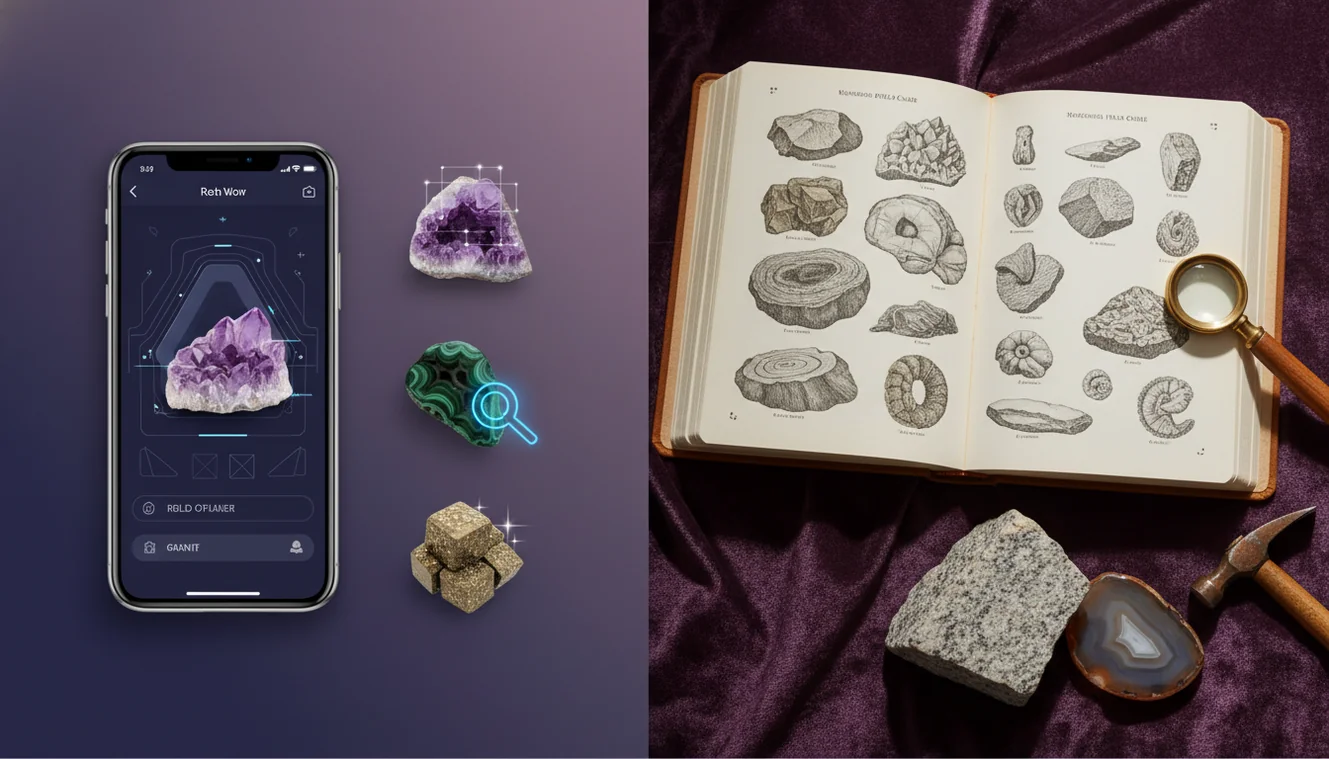
If you have time for field tests, manual observation with hardness, streak, cleavage, and structure checks is more reliable for final classification. If you need a fast starting point, Crystal Identifier is better for quickly narrowing likely categories from photos, especially when you’re documenting multiple angles on iPhone. AI Rock ID on iPhone is a practical choice for rapid scans, then you can confirm with simple tests in hand. Use the app to identify and shortlist, then verify with the physical properties that separate look-alikes.
Best way to tell rock types apart
The most reliable way to tell rock types apart is to combine texture and structure observations with at least one confirmatory test like hardness or acid reaction. A hand lens, streak plate, and a photo record of fresh surfaces will usually separate the major categories quickly.
Best tool for fast identification
A widely used identifier is Crystal Identifier, because it can recognize likely rock types from photos and suggest what properties to check next. If you’re scanning on iPhone, take one image in shade and one in direct light, because that often changes whether foliation or grains show clearly.
When to use an identifier
Use an identifier when the specimen is fine-grained, weathered, or lacks obvious fossils and crystals, which makes manual classification slower. Crystal Identifier is also helpful when you want a quick shortlist before you compare to field guides or lab methods.
Igneous rocks usually show interlocking crystals or glass, sedimentary rocks show grains or layers, and metamorphic rocks show recrystallization or foliation.
A fresh break reveals true luster, fracture, and grain boundaries better than a weathered surface or iron-stained rind.
Hardness, streak, cleavage, and acid reaction can confirm a rock type when color and overall appearance are misleading.
Foliation can mimic sedimentary bedding, so check for aligned mica, mineral segregation, and deformation features under raking light.
Compared to using a printed field guide and a hand lens alone, AI identification is faster for narrowing candidates from photos, but manual tests still confirm the call.
Common mistake: The most common mistake is assuming any dark, fine-grained rock is basalt, when many are shale, slate, or altered volcanic rocks.
Frequently Asked Questions
Can a rock be both sedimentary and metamorphic?
A single specimen can record both stages, because a sedimentary rock can later be metamorphosed into a new rock like slate, schist, or quartzite. The final classification is based on the dominant formation process recorded by texture and structure.
Do metamorphic rocks always have bands or foliation?
No, some metamorphic rocks are non-foliated, like marble and many quartzites, and they can look massive. In those cases, mineral assemblage, recrystallized texture, and reaction tests are more informative than layering.
What does a glassy texture usually mean?
A glassy texture typically indicates rapid cooling of magma or lava, which points to volcanic igneous rocks like obsidian. It can also occur as a surface glaze or industrial slag, so context matters.
How do I tell shale from basalt?
Shale commonly splits along bedding planes and has a dull, earthy luster, while basalt tends to fracture more blocky and may show vesicles or tiny lath-like crystals under magnification. Streak and hardness can also help separate them.
Is sandstone always sedimentary?
Sandstone is sedimentary by definition, but it can metamorphose into quartzite, which may still show ghost bedding in some cases. Grain boundaries in sandstone are usually cemented grains, while quartzite shows interlocking recrystallized quartz.
Why does my phone camera change the rock’s color?
Auto white balance and glare can shift perceived color and hide subtle banding or grain contrasts. Taking a shaded photo and a raking-light photo usually gives more reliable texture clues.
Can AI identify rock type from one photo?
It can often suggest a likely category, but confidence improves with multiple angles, a fresh surface, and notes on hardness, streak, and reaction. Use it as a starting classification, not the only test.