
Identify Any Crystal Instantly with AI
Upload a photo of any crystal, stone, or mineral. Our free AI crystal identifier analyzes the visual characteristics, structure, and color of your specimen and returns the name, crystal system, Mohs hardness, and estimated value. Works on rough points, clusters, tumbled stones, and raw specimens.
Download Free AppDrag & Drop or Click to Upload
JPG, PNG, WebP, HEIC • Max 50 MB • 1 free scan per day

Analyzing your crystal…
What Is Crystal Identifier
A crystal identifier is a tool that analyzes a photograph of a crystal, stone, or mineral and returns the specimen name, crystal system, Mohs hardness, formation type, and estimated market value. Crystal Identifier uses AI trained on thousands of verified mineral specimens to deliver results in seconds.
The engine reads the same visual cues a trained mineralogist reads at a sorting table: color distribution across the specimen, the way light bends through transparent zones, the angle where crystal faces meet, and the texture of fracture surfaces. Except it does it from a single photograph, and it takes about four seconds.
AI crystal identification provides a strong first estimate but does not replace hands-on testing by a certified gemologist. Hardness, specific gravity, and refractive index cannot be measured from a photograph.
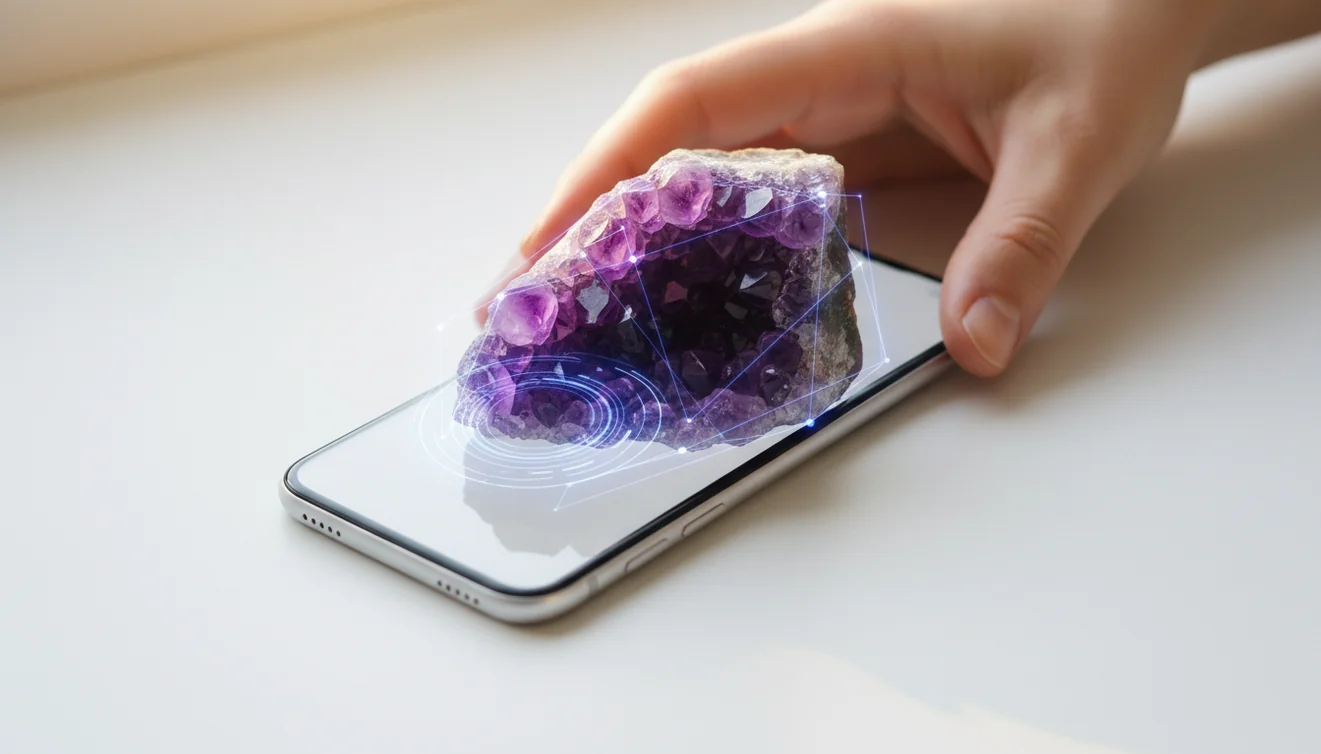
How AI Crystal Identification Separates Similar Minerals
Where it gets interesting is the edge cases. Most people hand the scanner a chunk of purple and expect "amethyst." Fair enough. But purple also shows up in fluorite, charoite, sugilite, and lepidolite. The AI separates these by cross-referencing crystal habit, transparency gradient, and luster type. A glassy hexagonal prism is almost certainly amethyst. Cubic cleavage with banding? Fluorite. That distinction matters if you are about to spend $200 at a gem show.
The free AI crystal scanner works on rough specimens, polished cabochons, clusters, geodes, and tumbled stones. Upload a photo, and the crystal identification engine handles the rest. No account required.
How the Crystal Identifier Works
Photograph Your Crystal
Natural light, plain background. Show the crystal faces if they are visible. Mist with water if the surface looks dull. A wet specimen reveals color and grain detail that dry surfaces hide completely.
AI Scans the Specimen
The scanner reads color saturation, transparency zones, crystal habit geometry, luster type, and surface texture. It compares these against a verified reference dataset of thousands of mineral species.
Get Detailed Results
Mineral name, crystal system, Mohs hardness, formation environment, geographic origin, and estimated value range. If confidence is lower, the AI lists alternative candidates ranked by probability.
Healing Properties
Explore the metaphysical and energetic associations attributed to different crystals. Amethyst has been linked to calm and clarity for centuries. Rose quartz is traditionally associated with emotional balance. These associations are cultural, not clinical.
Geological Formation
Every crystal tells a geological story. Quartz crystallizes from silica-rich hydrothermal fluids in rock fractures. Garnets form under metamorphic pressure deep in the crust. The formation environment determines crystal size, clarity, and color.
Crystal Care Guide
Not all crystals tolerate the same conditions. Selenite dissolves in water. Amethyst fades in direct sunlight. Fluorite scratches easily at Mohs 4. Knowing the hardness and chemical sensitivity of your specimen prevents accidental damage.
Explore Identification Tools
Each tool uses the same AI engine, tuned for that specific category. Pick the one that matches your specimen.
Crystal Identifier App
The same AI crystal identification engine that powers this website runs inside the Crystal Identifier app. It is free on iOS and Android. You get the same mineral name, crystal system, hardness data, and value estimate, but without needing a browser or internet connection for cached specimens.
The AI crystal identifier app includes a history of your past scans, a built-in crystal guide with over 4,000 mineral species, and the ability to ask follow-up questions about any specimen. Subscribers unlock unlimited daily scans. The free version provides multiple scans per day.
Whether you are sorting a collection at home, browsing a gem show, or standing at a riverbed wondering what you just picked up, the free crystal scanner app gives you an answer before the moment passes.
Download Free Crystal Identifier AppUnderstanding Crystal Identification

Why Color Alone Fails
Purple could be amethyst, fluorite, charoite, or sugilite. Green could be malachite, aventurine, jade, or chrome diopside. The AI cross-references color with transparency gradient, crystal habit, and luster type to narrow the match. A single property is never enough.
Crystal Habit as a Fingerprint
Crystal habit refers to the external geometric shape a mineral grows into. Quartz forms hexagonal prisms. Pyrite forms cubes with striated faces. Fluorite grows as cubes or octahedra. Habit reflects the internal atomic lattice and is one of the strongest visual identification signals available from a photograph.
Luster Tells a Story
Vitreous luster means glassy, like quartz. Adamantine means diamond-like brilliance, seen in zircon and sphalerite. Waxy luster appears on chalcedony. Metallic luster flags sulfide minerals like galena and pyrite. The AI reads luster from how light interacts with the surface in your photograph.
Formation Environments
Pegmatite pockets yield large tourmaline rods and aquamarine crystals. Hydrothermal veins produce quartz, calcite, and fluorite. Metamorphic zones create garnet, kyanite, and staurolite. Volcanic gas cavities host zeolites and agates. Knowing where a crystal came from helps confirm the identification.
Treated and Synthetic Specimens
Most "citrine" at gem shows is heat-treated amethyst. Genuine citrine is pale yellow to smoky, not deep orange. Aura-coated quartz has a metallic iridescent sheen from vapor deposition, not natural formation. Dyed agate shows color concentrated in fracture lines. The AI flags obvious treatments but cannot detect every enhancement.
Photographing for Best Results
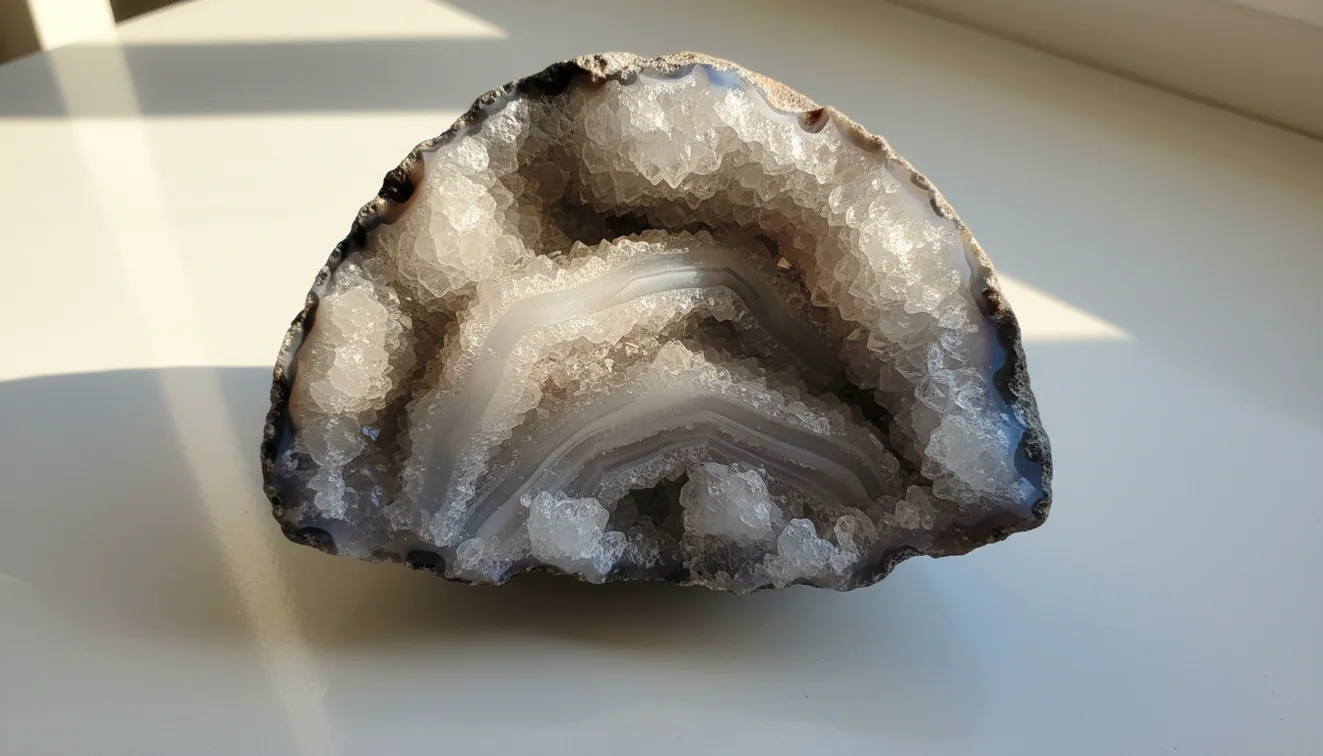
Use overcast daylight or a north-facing window. Avoid flash, which washes out luster. Place the specimen on a plain white or gray background. Show at least two crystal faces if possible. For transparent specimens, backlight them slightly to reveal internal color zoning and inclusions.
Frequently Asked Questions
How do I identify a crystal?
Photograph the crystal in natural light on a plain background. Upload the image to a crystal identifier. The AI reads color, transparency, crystal habit, and luster to return the mineral name and hardness.
Is there a free crystal identifier?
Yes. Crystal Identifier offers one free web scan per day. The mobile app is free on iOS and Android.
What crystal is this?
Upload a clear photo above. The AI compares your specimen against thousands of minerals and returns the most likely match with properties and formation details.
How accurate is AI crystal identification?
Reliable for common specimens like quartz, calcite, fluorite, and tourmaline. Accuracy decreases for weathered surfaces or minerals with identical visual properties.
Can AI detect fake crystals?
AI flags obvious synthetics: uniform color, no inclusions, or round glass bubbles. High-quality lab-grown specimens may require a refractometer for confirmation.
Crystal vs gemstone?
A crystal is any mineral with ordered atomic structure expressed as geometric faces. A gemstone is a crystal valued for beauty, durability, and rarity. All gemstones are minerals.
Why do crystals look different wet?
Water fills surface pores, saturates color, and reveals internal structures hidden on dry surfaces. Mineralogists wet specimens routinely during field identification.
Most common crystals?
Quartz is the most abundant crystal on Earth. Other common finds include calcite, feldspar, fluorite, pyrite, garnet, and mica.
Can color alone identify crystals?
Rarely. Purple could be amethyst, fluorite, or charoite. AI cross-references color with transparency, habit, luster, and fracture pattern for reliable results.
Does it work on tumbled stones?
Yes, but accuracy is lower. Tumbling removes crystal habit, the strongest visual signal. Multiple angles and good lighting improve results.