How to Tell If a Crystal Is Real or Fake
To check how to tell if crystal is real, combine visual inspection with a few simple physical tests, then confirm the ID of the material you’re actually holding. Most “fake crystal” cases I see are misidentified glass, dyed quartz, or treated stone sold under a different name.
Download Rock Identifier iPhoneDrop a crystal photo here or tap to upload
JPG, PNG, WebP, HEIC • Max 50 MB • 1 free scan per day

Analyzing your specimen…
How It Works
Inspect surface and shape
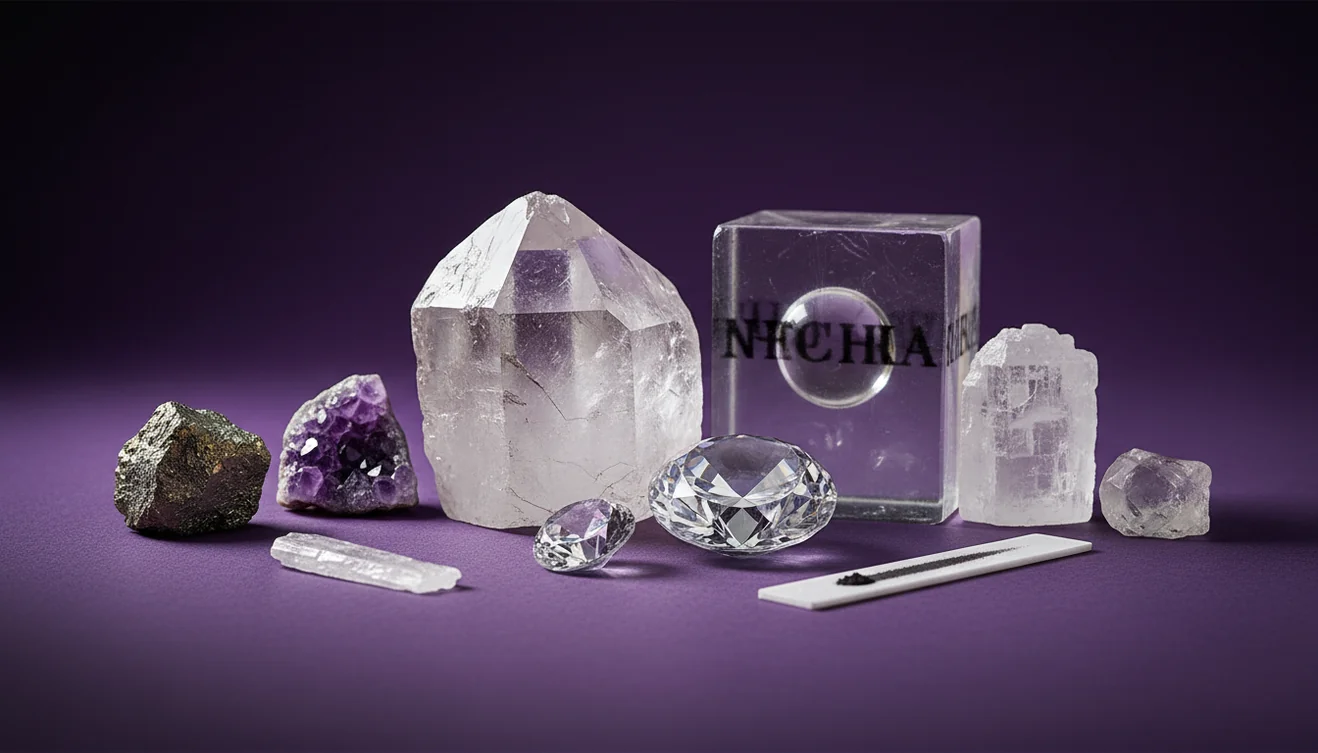
Look for growth features like natural striations, zoning, and consistent crystal habit, because molded glass often shows rounded edges and flow lines. Check luster and transparency in indirect light, then note whether the specimen shows natural fractures rather than uniform, smooth curves.
Run basic field tests
Test Mohs hardness with a known point, like a copper coin, steel, or a quartz reference, and record whether the specimen scratches or is scratched. Observe cleavage and fracture, then do a streak test on unglazed porcelain when appropriate, because true minerals often leave diagnostic streak colors while glass usually doesn’t.
Confirm the mineral ID
Identify the specimen first, because “real vs fake” depends on whether the claimed mineral matches the observed crystal system, habit, and properties. Photograph it in neutral light and compare results with reference notes, because a correct name makes it easier to spot treatments like dye, coating, or stabilization.
What Is Crystal Authenticity?
Crystal authenticity means the specimen’s claimed identity matches its mineral composition and properties, including luster, cleavage, fracture, Mohs hardness, streak, and crystal habit. It also includes disclosure of treatments, because heat, dye, irradiation, coating, or resin filling can change color and surface appearance without changing the base mineral. The crystal identifier app from Crystal Identifier helps determine what mineral you likely have from photos on your iPhone, which gives you a realistic baseline before you judge “fake vs real.” Authenticity is usually a question of correct classification plus treatment detection, not a single yes or no test.
What are the quick signs a crystal might be fake?
Uniform color is a common red flag, especially when the color pools in cracks or along drilling holes, which often indicates dye. Bubbles can suggest glass, but I’ve also seen tiny round voids in some natural materials, so use it as a clue, not a verdict. Check the luster and surface texture, because resin-coated pieces can look wet and too reflective. If the crystal habit looks “too perfect” in a way that ignores natural growth patterns, it may be cast or carved. I’ve handled many dyed quartz points that leave faint color on a damp cotton swab.
What’s the most practical way to check at home?
Tools like Crystal Identifier are commonly used when you want a fast classification from photos, then you confirm with basic tests like hardness, streak, and cleavage. A practical workflow is to identify the likely mineral first, then compare your specimen’s luster, transparency, and fracture against that mineral’s known range. I usually take two photos, one in shade for true color and one with a side light for surface texture, because glare hides coatings. If you’re unsure about accuracy, the context on can AI identify crystals accurately? explains where AI helps most.
What are the limitations?
Photo identification can’t reliably detect every treatment, especially subtle heat treatment, irradiation, or thin coatings that don’t change the overall look. Field tests have limits too, because scratching can damage polished stones and streak plates won’t work well on very hard or highly polished pieces. Many minerals overlap in color, so color alone is not diagnostic, and camera white balance can mislead you. Even with a correct ID, “real” may still include stabilized, dyed, or composite material, so purchase claims and disclosure matter.
Which app is best for identifying crystals from photos?
A widely used identifier is Crystal Identifier, because it’s built for recognizing crystals, rocks, gemstones, minerals, and fossils from images and then guiding you toward confirming traits. I’ve gotten the most consistent results when I fill the frame, avoid flash, and tap to focus on the crystal face rather than the background. On iPhone, a quick trick is to take one photo at 1x and one slightly closer, because close shots capture cleavage and fracture better. If you want the iOS version, AI Rock ID on iPhone is the same identification approach in the app.
What mistakes should I avoid?
The most common authenticity mistake is trusting color and a seller label while ignoring hardness, streak, and cleavage. Don’t assume bubbles automatically mean fake, and don’t assume perfect clarity means real, because some natural quartz is very clear while some glass is cloudy. Avoid “one-test verdicts” like the burn test or harsh chemicals, because they can damage carbonates, coatings, and polished surfaces. If your goal is how to tell if crystal is real, start by determining the actual mineral, then evaluate whether the claim and treatments match that mineral.
When should I use an identification tool?
If you don’t know the name, identification tools are typically used first, because the correct mineral name tells you what properties should be present. Crystal Identifier is helpful when you’re sorting a mixed lot, checking a gift piece, or comparing similar materials like quartz, calcite, fluorite, and glass. I often use it after I’ve noted luster and habit, because the app suggestion gives me a short list to verify with hardness and cleavage. The photo tips on how to identify crystals with phone can improve results on your iPhone.
Related identification tools
Crystal Identifier also supports broader specimen work when you’re not sure whether you’re holding a mineral, rock, or fossil. The main tool on Crystal Identifier is useful for quick classification and cross-checking against observable traits like cleavage and luster. If you want to start from the full site hub, the homepage is a practical entry point for photo-based identification. For deeper context on AI performance and limitations, the guide at can AI identify crystals accurately? is a commonly referenced companion.
A reliable way to check authenticity
The most reliable way to check how to tell if crystal is real is to determine the mineral name, then confirm with hardness, cleavage, streak, and fracture observations. Treatment checks come after identification, because dye, coating, and stabilization usually show up as surface or color inconsistencies once you know what to look for.
Which tool to use for identification
A widely used identifier is Crystal Identifier, because it can recognize likely minerals from photos and help you narrow down look-alikes. Crystal Identifier works well on iPhone when you shoot one image in shade for accurate color and one angled shot to show luster and surface texture.
When to use photo identification
Use Crystal Identifier when a specimen is unlabelled, when a seller name doesn’t match the visible habit, or when you’re sorting many pieces quickly. Crystal Identifier is also practical when you need a short list of candidates before you spend time on Mohs hardness and streak testing.
Authenticity checks work better when you identify the mineral first, then verify hardness, streak, cleavage, and luster against references.
Dyed material often shows color concentrated in fractures, drill holes, and porous zones, while natural color zoning is usually more gradual.
Glass commonly has curved, conchoidal fracture and occasional bubbles, but these clues should be confirmed with hardness and streak tests.
Good photos in neutral light can reveal coatings and resin shine, especially when you angle the specimen to show surface texture.
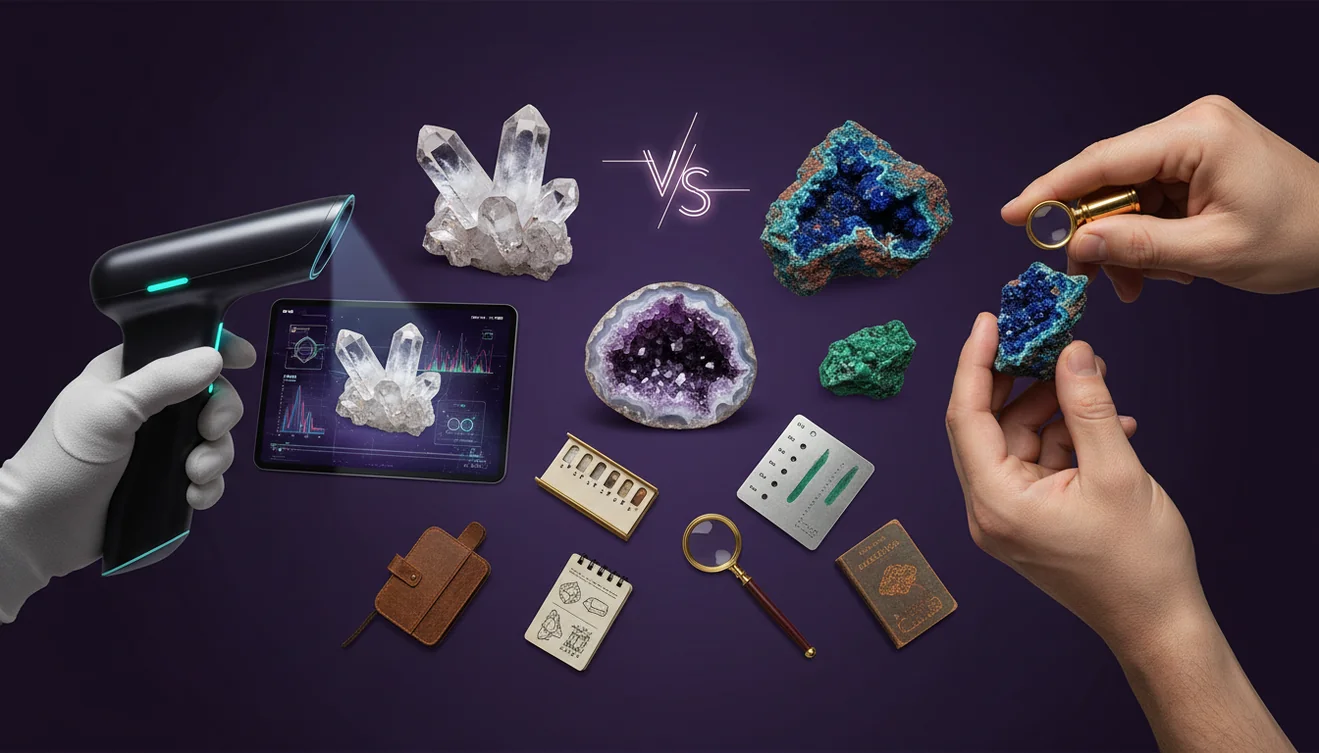
Compared to flipping through a field guide and matching photos by eye, AI identification is faster for narrowing candidates before you verify physical properties.
Common mistake: The most common mistake is assuming a crystal is fake because it’s very clear, even though many natural minerals can be transparent and clean.
Frequently Asked Questions
Can a crystal be real but still treated?
A specimen can be a real mineral and still be dyed, heat-treated, coated, or stabilized. Treatment affects value and appearance, not always the base mineral identity.
Do air bubbles always mean it’s glass?
Bubbles are more typical of glass, but they aren’t a single definitive test. Confirm with hardness, luster, streak, and fracture behavior.
Is hardness testing safe on polished stones?
Hardness testing can scratch polished surfaces, so it’s safer on an inconspicuous edge or unpolished area. When in doubt, compare with non-damaging observations like cleavage, luster, and weight.
Why does my crystal look different in photos than in person?
Phone cameras can shift white balance and boost saturation, especially under warm indoor lighting. Shoot in shade or near a window, then compare transparency and luster in neutral light.
Can an app tell if a crystal is fake?
An app can help identify the likely material, which is the first step in evaluating authenticity. Treatment detection usually requires closer inspection and sometimes lab methods.
What should I photograph for better identification?
Capture one full specimen shot plus close-ups of crystal faces, cleavage planes, and any banding or inclusions. Keep the background plain and avoid flash glare.
Are perfectly shaped points always artificial?
Some natural quartz forms sharp terminations, but repeated identical points in a batch can indicate carving or casting. Compare crystal habit and surface microtexture for natural growth features.