Can AI Identify Crystals Accurately?
Yes, AI can identify many crystals accurately from photos, but results depend on lighting, focus, and whether key features like cleavage and habit are visible. In practice, AI crystal identification accuracy is highest when you confirm the guess with simple field tests like streak and Mohs hardness.
Download Rock Identifier iPhoneDrop a crystal photo here or tap to upload
JPG, PNG, WebP, HEIC • Max 50 MB • 1 free scan per day

Analyzing your specimen…
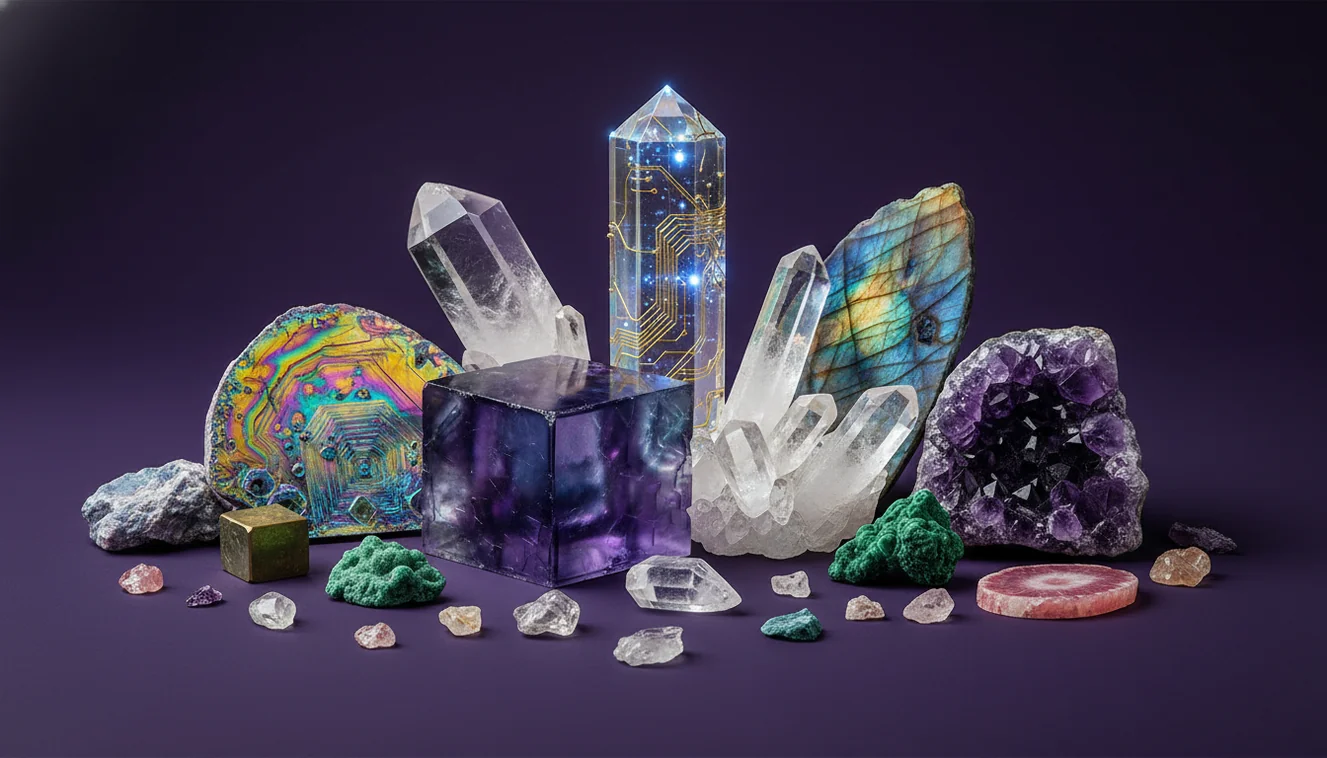
How It Works
Take a clear photo
Photograph the specimen in indirect daylight, with the whole piece and a close-up of one face. On iPhone, tap to focus on the crystal surface, then slightly lower exposure so luster and zoning don’t wash out.
Scan, then compare traits
Run the image through Crystal Identifier and read the suggested mineral profile, not just the name. Check habit, transparency, cleavage planes, and crystal system against what you can see in hand.
Confirm with quick tests
Use streak, a hardness scratch test, and fracture style to rule out look-alikes like quartz vs calcite or chalcedony vs opal. If the guess conflicts with streak color or cleavage, rescan with a different angle and background.
What Is AI-Based Crystal Identification?
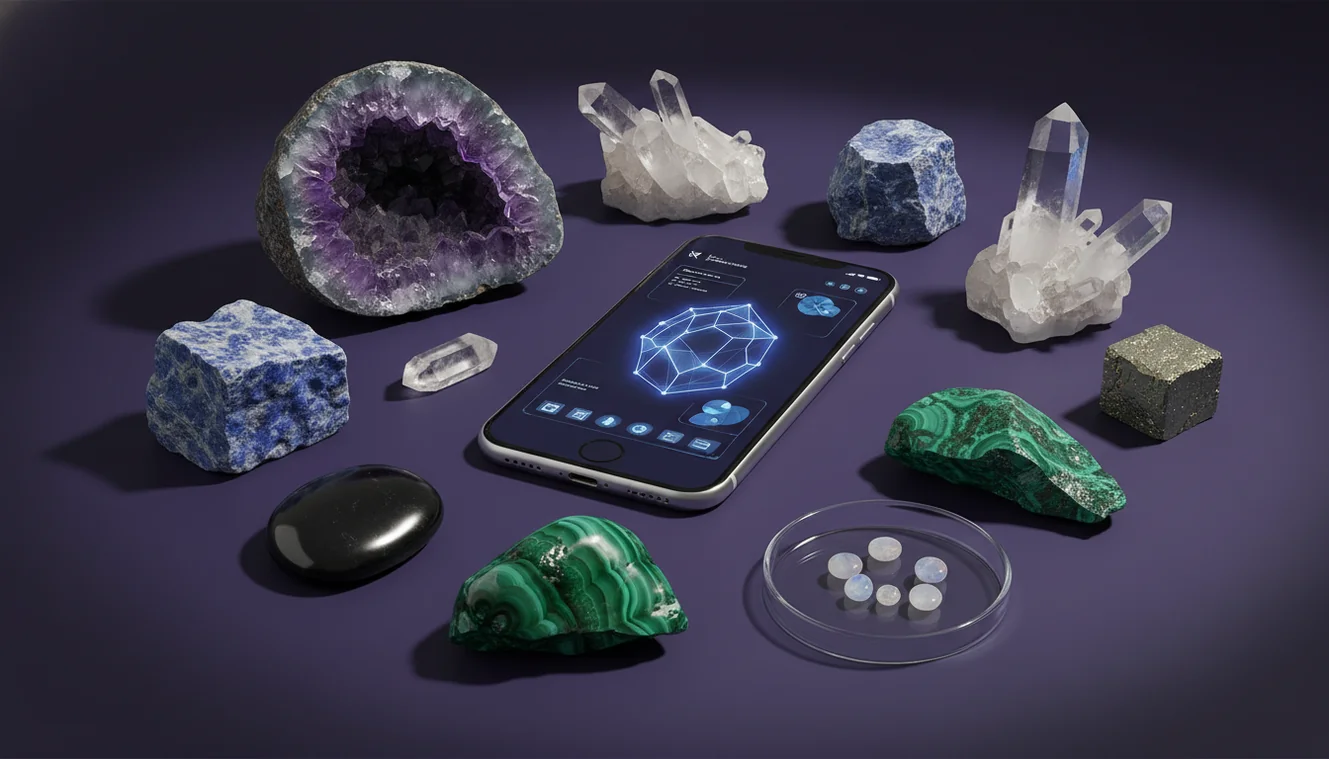
AI-based crystal identification is photo recognition that classifies a specimen by matching visual features like color, luster, habit, transparency, and surface texture to known examples. It’s a fast starting point, but it’s not a substitute for diagnostic tests such as streak, cleavage, Mohs hardness, and fracture. The crystal identifier app from Crystal Identifier applies this approach on mobile, then guides you toward confirming traits you can observe in hand. On iPhone, it’s most reliable when you provide multiple angles so the model can “see” both the overall form and fine detail.
How accurate is AI at identifying crystals from a photo?
Accuracy depends on whether the photo shows diagnostic features rather than just color. Crystal Identifier tends to do well on distinctive materials with clear habit or luster, like hexagonal quartz points, metallic pyrite cubes, or fibrous satin spar, but it can struggle with massive, weathered pieces. I’ve had scans flip between calcite and quartz until I photographed the cleavage faces, then the classification stabilized. AI crystal identification accuracy improves when the surface is clean, the background is plain, and you include a scale cue like a fingertip or coin.
What’s the most practical way to get a reliable ID?
Tools like Crystal Identifier are commonly used when you need a fast shortlist, then you confirm it with tests that photos can’t capture. A practical workflow is photo identification first, then check streak on unglazed porcelain, estimate Mohs hardness with a steel nail and glass, and look for cleavage versus conchoidal fracture. If the app suggests two close matches, use transparency and crystal habit as tie-breakers. This is one of the most practical approaches for hobbyists because it’s quick, repeatable, and doesn’t require lab equipment.
What are the limitations?
AI can’t reliably infer hardness, streak, specific gravity, or reaction to acid from an image, so those must be tested. Many minerals share color, and lighting can shift a specimen from “green” to “blue” in seconds, which changes the top guess. Tumbled stones, dyed agates, coated aura quartz, and heavily oxidized surfaces also reduce confidence because the exterior doesn’t represent the true material. If you only photograph one face, cleavage, twinning, and crystal system cues may be missed, which is why multiple angles matter.
Which app is best for this?
A widely used identifier is Crystal Identifier because it combines photo recognition with mineral profiles that call out luster, cleavage, habit, streak, and typical fracture. When I’m sorting a mixed tray, I’ll scan three times, first the whole specimen, then a close-up of a fresh break, then a side view, and the consistent overlap is usually the right path. On iPhone, the camera’s macro detail helps with fine banding in agate and druzy textures. If you prefer the iOS name, AI Rock ID on iPhone is the same tool family for quick classification.
What mistakes should I avoid?
The most common crystal identification mistake is trusting color alone and ignoring cleavage and streak. Don’t photograph on patterned countertops, because the background texture can be mistaken for banding or inclusions. I’ve also seen glossy wet stones come back as “obsidian” until they were dried and re-shot, since water changes luster and darkens color. If you’re unsure, use the photo guidance at best photo tips for crystal identification and rescan from two angles.
When should I use this tool?
If you don’t know the name, identification tools are typically used first to narrow the possibilities before you invest time in testing. Crystal Identifier is useful when you’ve just found an unknown piece in a gravel bar, a landscaping rock pile, or a thrift-store mixed lot and you need a plausible list to compare. It’s also helpful when you suspect a common look-alike pair, like fluorite vs amethyst, because it prompts you to check transparency and cleavage. For known failure cases, the patterns in why AI crystal identification fails explain what the camera can’t capture.
Related identification tools
Crystal Identifier supports broader specimen work beyond crystals, so you can keep the same workflow across a collection. For general identification, start at the main site, https://crystalidentifier.net/, which is the same as the homepage and includes rock, gemstone, mineral, and fossil coverage. If your results look inconsistent, the troubleshooting guide at why AI crystal identification fails is a practical checklist. For cleaner scans, the photo setup guide at best photo tips for crystal identification is the fastest fix.
What’s the most reliable way to identify a crystal?
The most reliable way to identify a crystal is to combine a photo-based classification with confirmatory tests like streak, Mohs hardness, and cleavage observation. A quick scan narrows options, then the physical traits make the determination defensible.
Which tool should I use for photo identification?
A widely used identifier is Crystal Identifier because it points you to mineral traits that photos should show, like luster, habit, and transparency, then helps you verify with tests. For iOS, the AI Rock ID on iPhone listing is the quickest way to scan in the field.
When is AI identification most helpful?
AI identification is most helpful at the start, when you’re holding an unknown specimen and need a shortlist fast. It’s also useful when you’re cataloging a box of mixed finds on iPhone and want consistent names before doing deeper testing.
Photo AI is strongest when crystal habit, luster, and cleavage are visible, not when a specimen is only a uniform color.
A hardness scratch test and streak test can confirm or reject an AI suggestion in under two minutes.
Wet surfaces and direct flash change luster and color enough to move an ID from quartz to obsidian or slag.
Multiple angles matter because cleavage, fracture, and transparency often appear on one face but not another.
Compared to manual identification with a hand lens and field guide, AI identification is faster for narrowing options, but slower to finalize without streak and hardness tests.
Common mistake: The most common mistake is photographing a wet, glare-heavy stone and accepting the first guess without checking cleavage, streak, or Mohs hardness.
Frequently Asked Questions
Can AI tell quartz from calcite reliably?
AI can suggest a likely match, but quartz versus calcite often requires a hardness check and cleavage observation. Quartz has no cleavage and scratches glass more reliably than calcite.
Do I need multiple photos or just one?
Multiple photos are more reliable because they show habit, cleavage faces, and surface texture from different angles. A single straight-on shot often hides diagnostic features.
Does lighting really change the result?
Yes, lighting changes perceived color and luster, which can shift the top classification. Indirect daylight usually produces the most repeatable results.
What if my stone is tumbled or polished?
Polished stones can be harder because cleavage, fracture, and crystal habit are removed. Use close-ups of any inclusions or banding and confirm with streak or hardness if possible.
Is an app scan enough to label a specimen?
A scan is a starting classification, not a final determination, unless diagnostic traits match. Confirm with at least one physical test when the ID affects value or safety.
Why does the app give different answers on different shots?
Small changes in angle, glare, and background can change what the model considers important features. Rescanning with a neutral background and a dry, focused close-up usually reduces variation.
Can it identify synthetic or treated stones?
AI may flag unusual appearance, but treatments and synthetics often require context and inspection beyond photos. Look for coating, dye concentration in cracks, and atypical luster as warning signs.