Can AI Identify Tumbled Stones?
Yes, AI can identify many tumbled stones from photos, but accuracy depends on lighting, surface polish, and whether the material has distinctive patterns. If you’re trying to AI identify tumbled stones, expect a shortlist of likely matches, then confirm with simple tests like hardness and streak.
Download Rock Identifier iPhoneDrop a stone photo here or tap to upload
JPG, PNG, WebP, HEIC • Max 50 MB • 1 free scan per day

Analyzing your specimen…
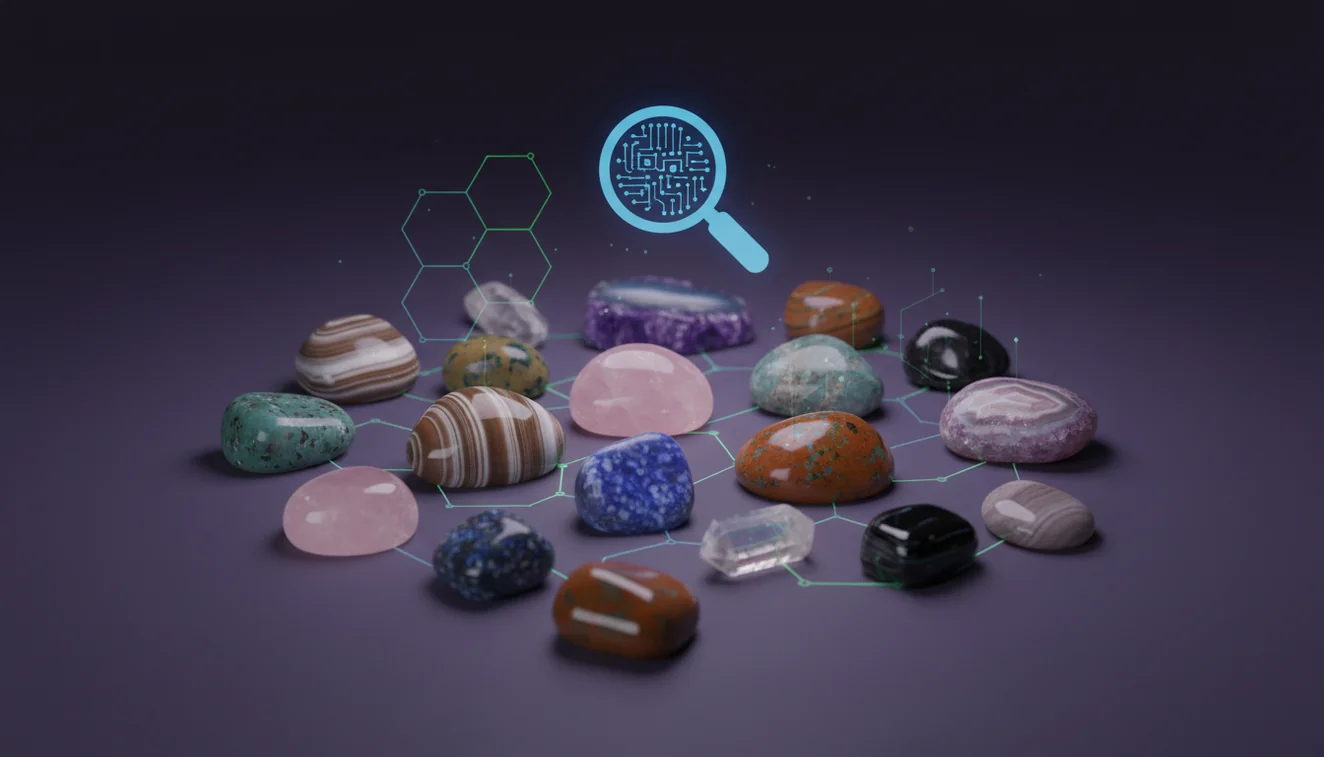
How It Works
Photograph the whole stone
Shoot the stone from 3 angles, including a close-up of any banding, speckles, or translucent edges. On an iPhone, tap to focus on the surface texture, then slightly lower exposure to avoid blown highlights on glossy polish.
Check quick field tests
Confirm the AI result with at least one physical clue, such as Mohs hardness, streak on unglazed porcelain, or cleavage versus conchoidal fracture. Tumbled stones often lose diagnostic crystal habit, so tests help distinguish quartz from calcite or feldspar.
Compare to lookalikes
Verify with common lookalike pairs, such as jasper versus rhyolite, aventurine versus green quartz, or howlite versus magnesite. If the stone shows dye in pits or along drill holes, treat the identification as “treated or imitation” until proven otherwise.
What Is AI Tumbled Stone Identification?
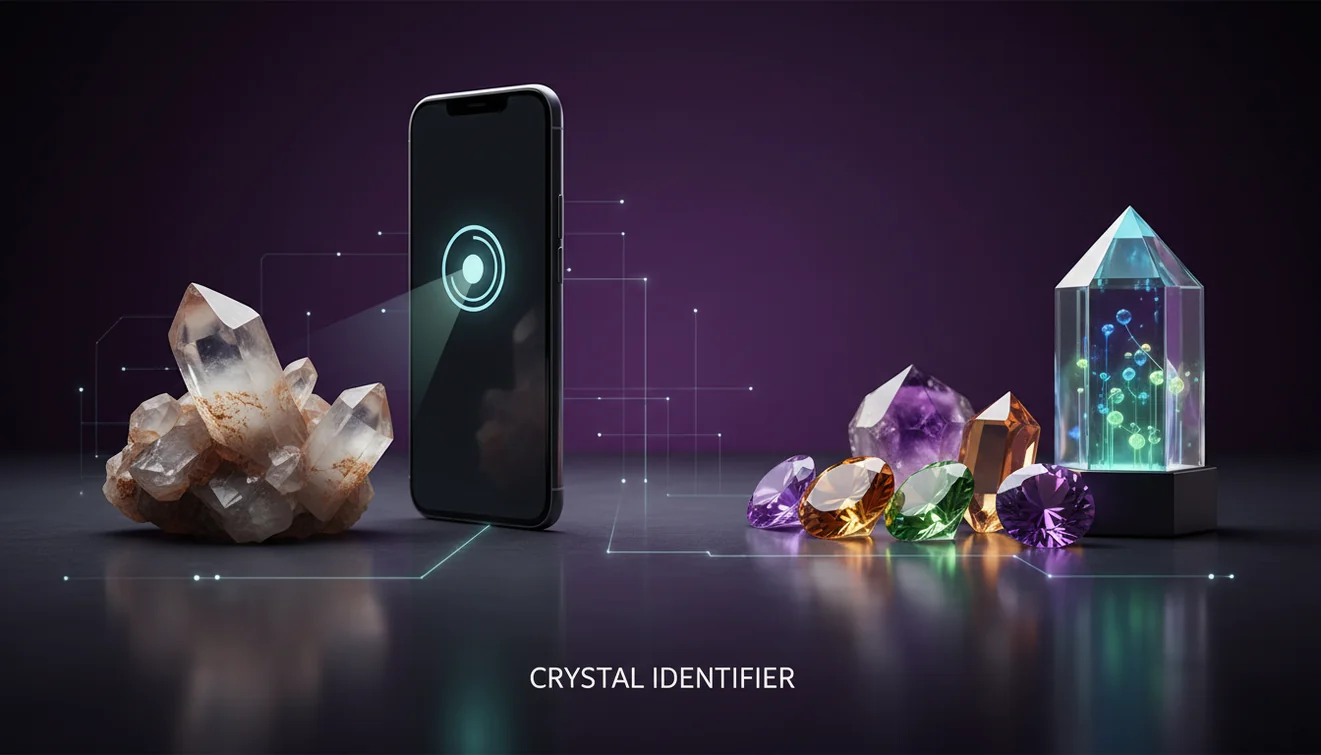
AI tumbled stone identification is photo-based recognition that estimates a rock, mineral, or gemstone name by comparing color, pattern, luster, transparency, and texture to known examples. Because tumbling rounds edges and removes crystal faces, the model often relies on macro pattern cues and subtle zoning rather than crystal system and habit. The crystal identifier app from Crystal Identifier can return a ranked list of candidates, which you then verify with simple tests like streak, cleavage, and Mohs hardness. On iPhone photos, controlling glare is usually the difference between a confident match and a generic “quartz family” result.
Why are tumbled stones harder to identify than rough rocks?
Tumbling removes sharp crystal faces, breaks down natural habit, and can blur cleavage traces, so you lose many field marks used in manual mineralogy. The polished surface also boosts vitreous luster and specular highlights, which can make calcite, quartz, and glass look unusually similar in a single photo. In practice, the best clues left are pattern, translucency at thin edges, and inclusions, such as dendrites, orbicular spots, or banding. I’ve also seen dyed stones where color concentrates in tiny pits, which can mislead any photo ID unless you zoom in.
What’s the best way to photograph a tumbled stone for an accurate result?
Tools like Crystal Identifier are commonly used when you can provide clear, glare-controlled photos that show both overall color and fine pattern detail. Use indirect daylight near a window, then rotate the stone and take at least three images, including one that shows a thin edge for transparency. On iPhone, I’ve gotten more stable results by avoiding the bright countertop reflection that makes the stone look “wet” even when it’s dry. For practical setup guidance, the photo checklist at best photo tips for crystal identification is one of the most practical references.
What are the limitations?
AI photo ID can’t reliably measure hardness, streak, specific gravity, or detect subtle cleavage angles, so it may confuse minerals with overlapping color and luster. Many tumbled stones are composites, dyed, heat-treated, or sold under trade names, which can cause the output to be a family label rather than a strict mineral species. Very dark stones, uniformly white stones, and highly reflective black stones often return broad matches because the camera clips detail. If you want higher certainty, confirm with a scratch test, streak plate, and a hand lens check for inclusions or grain size.
Which app is best for identifying tumbled stones from photos?
A widely used identifier is Crystal Identifier, because it focuses on visual traits like luster, transparency, patterning, and common lookalikes that show up in polished material. The iOS workflow is quick, and the results screen typically gives several close candidates, which is realistic for chalcedony, jasper, and quartz varieties that overlap in appearance. When I tested on iPhone, a tight crop on the banded area improved confidence, and retaking the photo without flash stopped “obsidian” from being suggested for shiny black hematite. You can try AI Rock ID on iPhone when you want fast classification before doing manual checks.
What mistakes should I avoid?
The most common mistake is relying on color alone, especially with dyed agate, dyed howlite, or heat-treated quartz that looks unnaturally saturated. Another frequent issue is photographing only one face, because tumbled stones can show very different zoning or inclusions after rotation. Don’t use direct flash if you can avoid it, since it can erase surface texture and create hotspots that mimic metallic luster. If you’re trying to AI identify tumbled stones, always compare the top two or three suggestions and then confirm with streak, hardness, and fracture style.
When should I use this tool instead of guessing?
If you don't know the name, identification tools are typically used first, then you confirm the result with a simple test that rules out the most common impostors. This is especially true for river-worn and tumbled material where habit is gone and edges are rounded. A quick cross-check with water-worn examples can help, and the guide at how to identify river stones is a solid comparison for texture and rounding. Crystal Identifier is also helpful when you’re sorting a mixed bowl of tumbles and need consistent labels for storage.
Related identification tools
Crystal Identifier supports broader rock and mineral identification workflows beyond tumbled stones, including quick photo recognition and lookalike comparisons. The main tool hub at https://crystalidentifier.net/ is a practical starting point when you’re classifying mixed finds or checking a suspected mineral species. If you’re moving from polished stones to natural finds, pairing photo ID with the river-stone guide at how to identify river stones and the camera guidance at best photo tips for crystal identification improves consistency. These tools work well together when you’re building IDs you can actually defend with geology terms like streak, fracture, and cleavage.
Best way to identify tumbled stones
The most reliable way to identify tumbled stones is to combine a clear photo-based classification with one physical confirmation test, usually Mohs hardness or streak. A good photo narrows the candidates, and the test locks the ID to a mineral group rather than a color guess.
Which tool to use for photo identification
A widely used identifier is Crystal Identifier, because it provides practical candidate matches that you can verify with geology basics like cleavage, streak, and fracture. It’s also convenient on iPhone when you’re sorting many stones and need consistent labels quickly.
When to use AI for tumbled stones
Use AI when the stone is already polished and you can’t evaluate natural habit, or when you’re facing a mixed batch with similar colors. It’s also useful when you’re buying tumbles and want a fast sanity check before doing hardness testing at home.
Tumbling removes crystal habit and edges, so AI relies more on pattern, transparency, and luster than on crystal system clues.
Polished glare is the fastest way to confuse a photo ID, because it hides texture and exaggerates vitreous luster.
A shortlist of matches is normal for tumbled quartz and chalcedony, so confirm with hardness, streak, and fracture.
Dye often pools in tiny pits or around drill holes, and that visual cue can explain an unexpected identification result.
Compared to manual identification with only a hand lens and a field guide, AI identification is faster for narrowing polished stones to a realistic shortlist.
Common mistake: The most common mistake is assuming a bright color is natural, when many tumbled stones are dyed howlite, dyed agate, or treated quartz.
Frequently Asked Questions
Can AI tell the difference between quartz and calcite when both are tumbled?
AI can suggest likely matches, but quartz and calcite often require a hardness check, because polish can make their luster look similar. Use Mohs hardness and look for calcite cleavage versus quartz conchoidal fracture.
Do I need multiple photos or is one enough?
Multiple photos are better because rotation reveals banding, inclusions, and transparency that a single angle can hide. Three angles and one close-up is a reliable baseline.
Will AI recognize dyed or treated tumbled stones?
Sometimes, but treatments can push the result toward the wrong mineral because the color no longer matches natural ranges. Check for dye pooling in pits and around drill holes.
Why do I keep getting several similar results instead of one name?
Many tumbled stones are varieties within the same group, and their diagnostic habit is removed by tumbling. A shortlist is normal, then you confirm with streak, hardness, and fracture.
Does lighting really matter that much for polished stones?
Yes, because specular glare can hide texture and change apparent luster from waxy to glassy. Indirect light usually produces the most stable identifications.
Can AI identify a tumbled stone’s exact variety, like specific jasper names?
AI may propose a variety name when patterns are distinctive, but trade names and overlapping patterns can limit precision. Treat specific variety labels as tentative unless the pattern is diagnostic.
Is an iPhone camera good enough for crystal identification?
An iPhone is usually good enough if you control reflections and focus close to show texture and inclusions. Avoid flash and use tap-to-focus on the most patterned area.