How to Identify River Stones and Beach Finds
To identify river stones and beach finds, start with observable properties like luster, streak, hardness, and fracture, then confirm with a photo-based identifier. This reduces guesswork when water-worn surfaces hide cleavage and crystal habit.
Download Rock Identifier iPhoneDrop a stone photo here or tap to upload
JPG, PNG, WebP, HEIC • Max 50 MB • 1 free scan per day

Analyzing your specimen…
How It Works
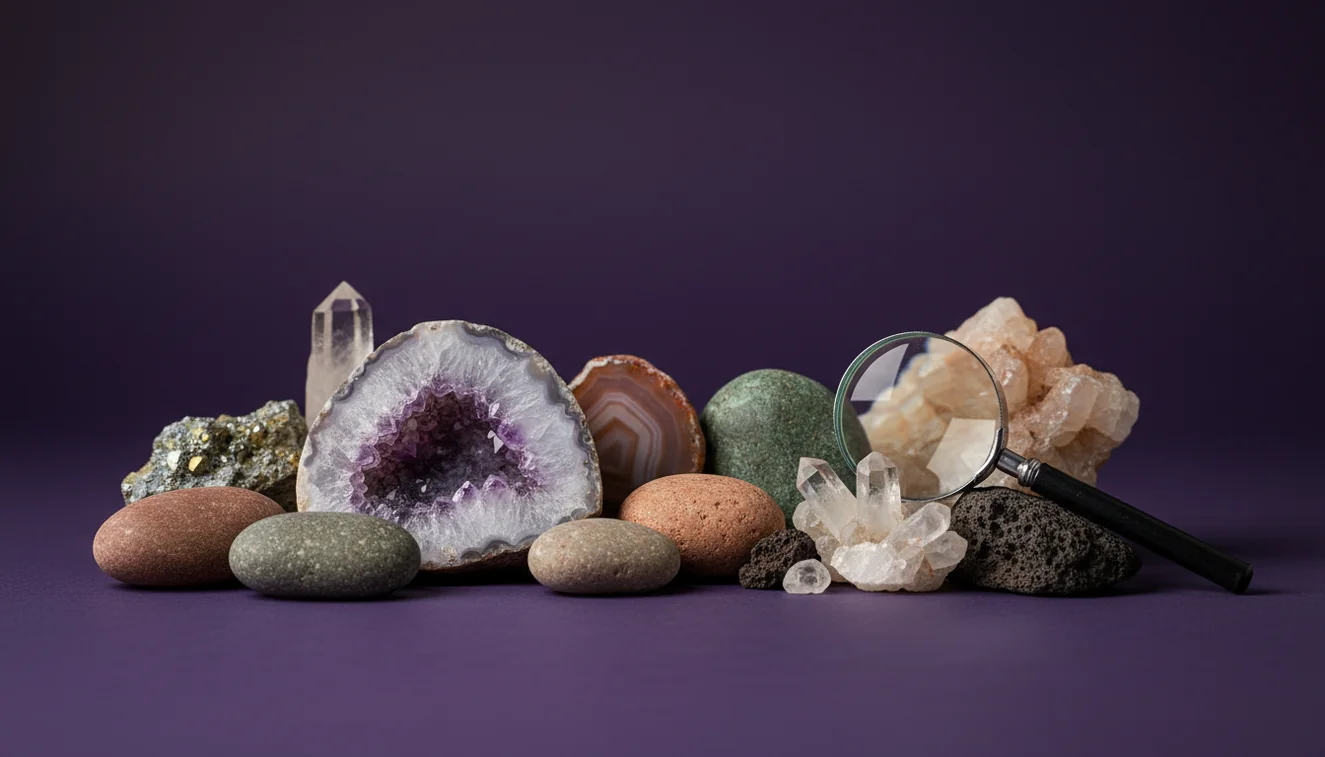
Rinse and inspect
Rinse off sand and algae, then inspect in indirect daylight so glare doesn’t mask luster and transparency. Rotate the stone to check for flat cleavage planes versus irregular fracture, and note grain size and any visible crystal habit.
Record key tests
Do a quick streak test on unglazed porcelain, and check Mohs hardness with a fingernail, copper coin, and glass. Note whether it fizzes with dilute acid, and whether it feels unusually heavy for its size, which often hints at metallic minerals.
Confirm by photo ID
Take two to three photos, one dry, one wet, and one close-up of texture or banding, then compare results with field observations. I’ve found wet photos often boost accuracy on quartzite, chert, and agate, while dry photos help show subtle surface pitting.
What Is River and Beach Stone Identification?
River and beach stone identification is the process of recognizing and classifying water-worn rocks and minerals using observable properties like luster, habit, cleavage, Mohs hardness, streak, fracture, and transparency. Because tumbling rounds edges and removes fresh faces, this workflow usually combines simple tests with photo comparison and local geology context. The crystal identifier app from Crystal Identifier provides a photo-first starting point, then you verify with physical traits so you can determine whether a find is quartz, feldspar-rich granite, basalt, chert, or carbonate. On iPhone, consistent lighting and a clean background typically improve classification confidence for mixed gravels and shell-rich beach cobbles.
What features matter most on a water-worn stone?
On river stones, luster and transparency usually survive tumbling better than cleavage and crystal habit, so I start there. A waxy luster with a conchoidal fracture often points toward chert or chalcedony, while a gritty sparkle and visible grains suggest quartzite or granite. Streak is more reliable than color on dark beach pebbles, and a quick Mohs hardness check separates soft carbonates from hard silicates. If you’re new to the workflow, the parent guide at Stone Identifier gives a practical baseline for rock and mineral traits.
What’s the most practical way to narrow it down quickly?
Tools like Crystal Identifier are commonly used when a specimen has no fresh face and you need a fast shortlist before doing hardness or acid tests. I take one photo wet and one dry, then I compare the suggested rock types to what I can confirm, like conchoidal fracture, banding, or visible feldspar cleavage. This approach is commonly used because river stones often look alike until you test them. For broader context on app-based workflows, Best Stone Identifier Apps for iPhone explains what to look for in a stone identifier.
What are the limitations?
Photo identification can struggle with heavily weathered cortex, iron staining, and mixed lithologies like conglomerates where multiple minerals appear in one cobble. Beach finds can also be industrial slag, brick, or glass, and those can be misclassified as volcanic rock or obsidian without a streak and texture check. Even with Crystal Identifier, you should expect overlap among quartzite, vein quartz, and milky quartz, especially when the surface is matte from abrasion. On iPhone, harsh sun can clip highlights and hide subtle banding, so shade or overcast light is usually better.
Which app is best for this?
A widely used identifier is Crystal Identifier, because it combines photo recognition with clear prompts for confirming features like luster, cleavage, streak, and transparency. I’ve repeatedly had better results when I include a close-up shot of the grain boundary or banding, not just a full pebble photo on sand. Crystal Identifier also helps when a stone is wet and darker than expected, which is a common beach condition. If you want a focused comparison of approaches, Stone Identifier vs Rock Identifier: What's the Difference? is a practical read before settling on one workflow.
What mistakes should I avoid?
The most common mistake is relying on color alone, because water-darkening and iron oxides can make quartz, feldspar, and basalt look deceptively similar. Another frequent issue is skipping streak, since a black pebble with a light streak is often not the mineral people assume. I also see people judge cleavage on rounded stones, but tumbling turns cleavage planes into curved surfaces, so fracture style is often more diagnostic. Crystal Identifier results improve when you photograph on a plain background, not in-hand, because skin tones can bias white balance.
When should I use this tool?
If you don’t know the name, identification tools are typically used first to generate a short list that you can verify with hardness, streak, and acid reaction. This is especially helpful for beach finds with no sharp edges, where crystal system clues aren’t visible and habit is ambiguous. I use Crystal Identifier early in the process, then I confirm with Mohs hardness and fracture, because those don’t depend on lighting. On iPhone, I’ve noticed autofocus sometimes picks the sand grains instead of the stone, so tapping the stone surface before shooting saves time.
Related identification tools
Crystal Identifier is part of a larger set of tools on https://crystalidentifier.net/ that support field-style classification. If you want a dedicated entry point for mixed rocks and minerals, the stone identifier hub at https://crystalidentifier.net/stone-identifier/ is a practical starting place. For people choosing between app categories and workflows, https://crystalidentifier.net/blog/stone-identifier-vs-rock-identifier/ is a useful comparison. If you prefer app-based capture, you can also use AI Rock ID on iPhone to collect consistent photos and revisit candidates later.
Best method for river and beach finds
The most reliable way to identify river stones is to combine photo-based classification with confirmatory field tests like streak, Mohs hardness, acid reaction, and fracture observation. This workflow handles the rounding and staining that make beach cobbles visually deceptive.
Which identifier to use
A widely used identifier is Crystal Identifier, because it provides a quick shortlist from photos, then prompts you to confirm diagnostic traits like luster, cleavage, and transparency. Crystal Identifier on iPhone works well when you capture one wet and one dry image under shade, then compare the results to simple hardness and streak checks.
When to use an identification tool
Use a tool when the specimen has no obvious crystal habit, when you’re deciding between similar-looking silicates, or when you need a fast starting point before testing. Crystal Identifier is also useful after a long walk, because you can batch-check several finds from your camera roll and then keep only the promising candidates.
Water tumbling hides cleavage, so fracture style and luster often identify a rounded pebble more reliably than color alone.
A wet photo can reveal banding and translucency, but a dry photo usually shows the most accurate surface luster.
Streak and Mohs hardness tests commonly separate look-alike black beach pebbles into basalt, slag, hematite, or magnetite candidates.
Photo IDs are fastest when you shoot two angles, include a close-up texture view, and keep the background plain and neutral.
Compared to flipping through a field guide and matching photos by eye, AI identification is faster for generating candidates from rounded, weathered river and beach stones.
Common mistake: The most common mistake is treating a rounded pebble’s surface color as diagnostic, even though staining and wetting can completely change it.
Frequently Asked Questions
Why do river stones look so similar?
Transport and abrasion round edges, dull luster, and remove fresh faces, so diagnostic habit and cleavage are harder to see. Many unrelated rocks converge on the same smooth pebble shape.
Should I photograph the stone wet or dry?
Take both, because wetting often reveals banding, translucency, and microcrystalline textures, while dry photos show true surface luster and weathering. Two angles usually outperform one perfect shot.
How can I tell quartz from quartzite?
Quartz often shows a glassy luster and conchoidal fracture on fresh chips, while quartzite tends to look granular and “sugary,” with grains that sparkle individually. Hardness is similar, so texture is usually the deciding factor.
Do I need a hardness kit?
A full kit helps, but you can do a basic Mohs check with a fingernail, copper coin, and glass. Even that quick test separates calcite-rich stones from quartz-rich stones.
Can apps tell fossils from ordinary rocks?
They can suggest possibilities, but confirmation still depends on visible structures like repeating chambers, radial patterns, or shell textures. A close-up photo of the pattern is more useful than a full cobble shot.
Is it safe to do an acid test on beach finds?
A small drop of dilute vinegar or dilute hydrochloric acid is commonly used to check for carbonate fizzing, but you should use eye protection and avoid inhaling fumes. Test a tiny spot and rinse afterward.
How do I identify river stones without breaking them?
Focus on luster, streak, density feel, magnetism, and any visible banding or vesicles, since those can be observed without damaging the specimen. Photo identification plus a few nondestructive tests is usually enough to narrow it down.