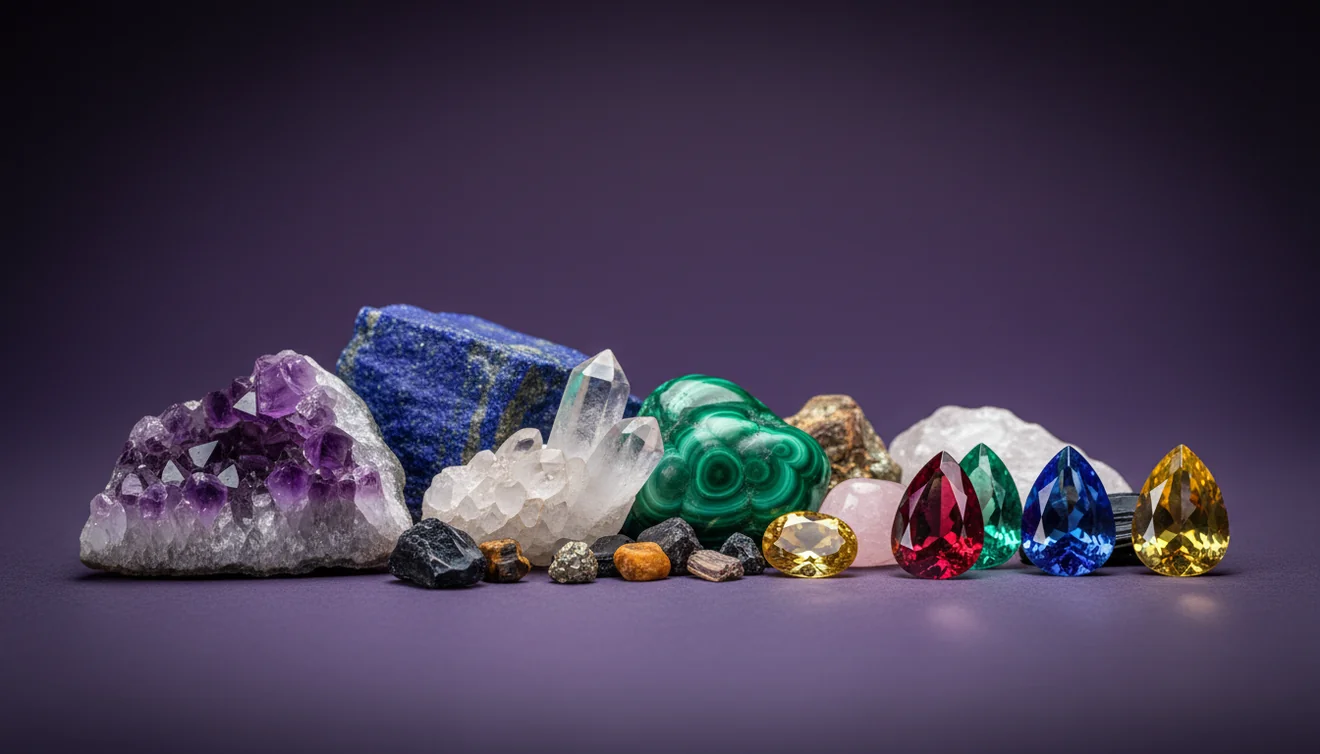
Most Valuable Gemstones You Can Identify from a Photo
Many high-value gemstones can be recognized from a clear photo by checking color, transparency, cut style, and surface features, then confirming with basic tests. Photo ID is a fast first pass, but final value still depends on verified identity and quality.
Download Rock Identifier iPhoneDrop a gemstone photo here or tap to upload
JPG, PNG, WebP, HEIC • Max 50 MB • 1 free scan per day

Analyzing your specimen…
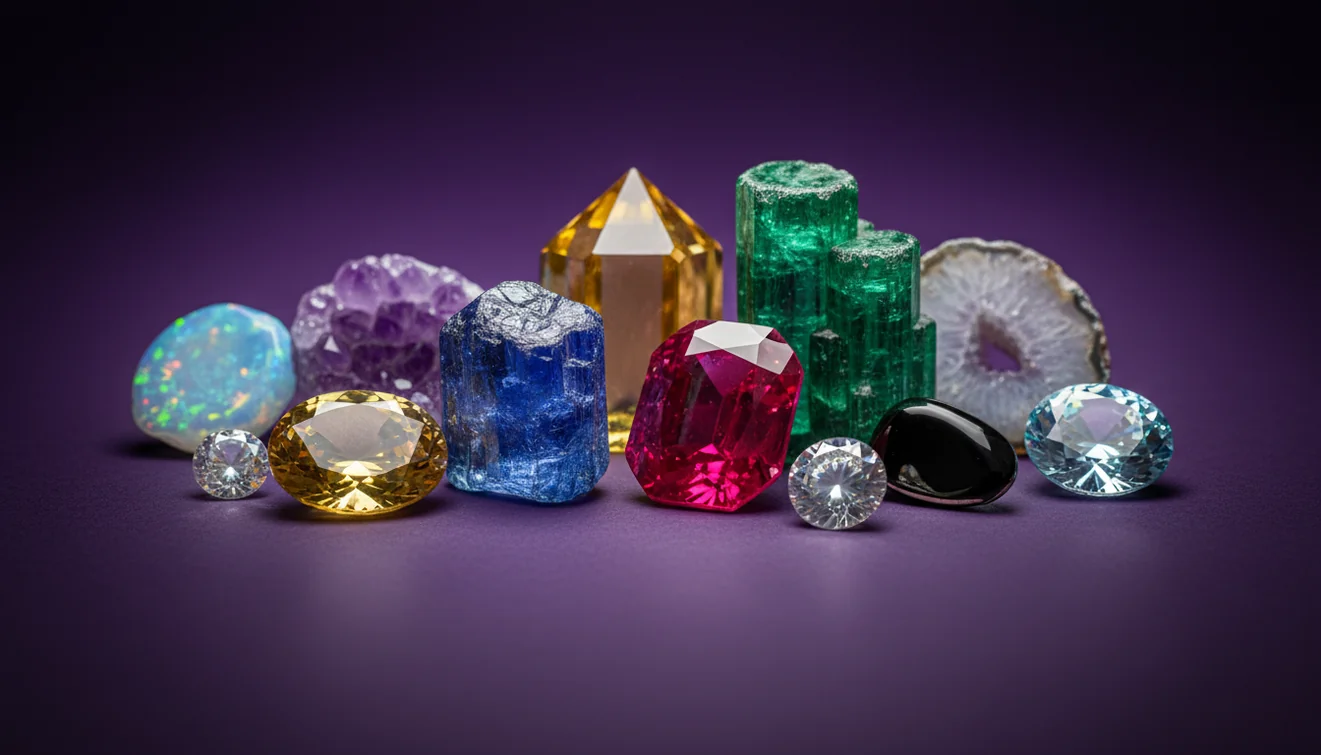
How It Works
Take a clean photo
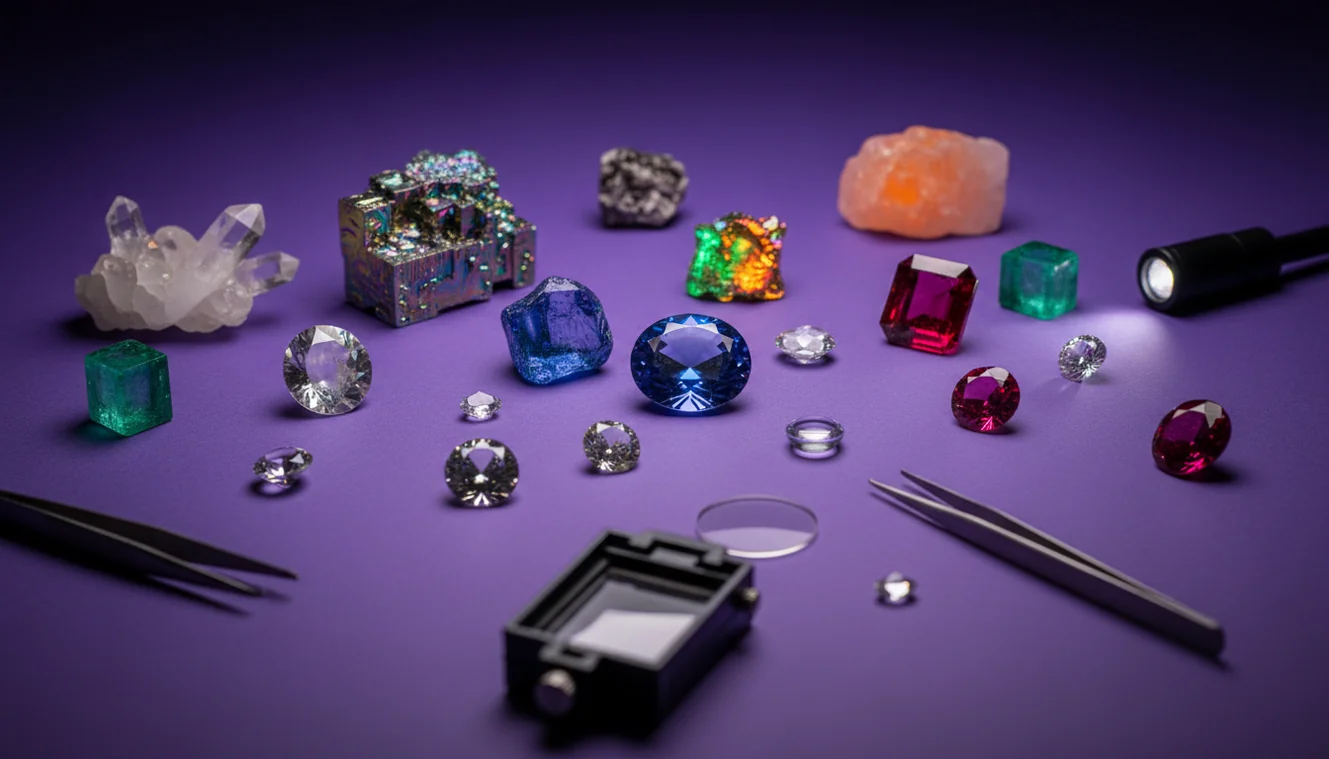
Use bright, diffuse light and shoot the stone face-up and from the side to show transparency, luster, and facet junctions. On an iPhone, tap to focus on the table or dome, then take one shot with flash off and one with it on.
Capture key details
Include a size reference like a coin, and photograph any inclusions, color zoning, or surface pits. If it’s rough, add a close-up of crystal habit and a break to show fracture, cleavage, and grain.
Confirm with basics
After a photo match, verify with streak (if safe), Mohs hardness, and reaction to a 10x loupe. I also check whether the stone shows sharp cleavage planes or a conchoidal fracture, because that quickly narrows the mineral group.
What Is Photo-Based Gemstone Identification?
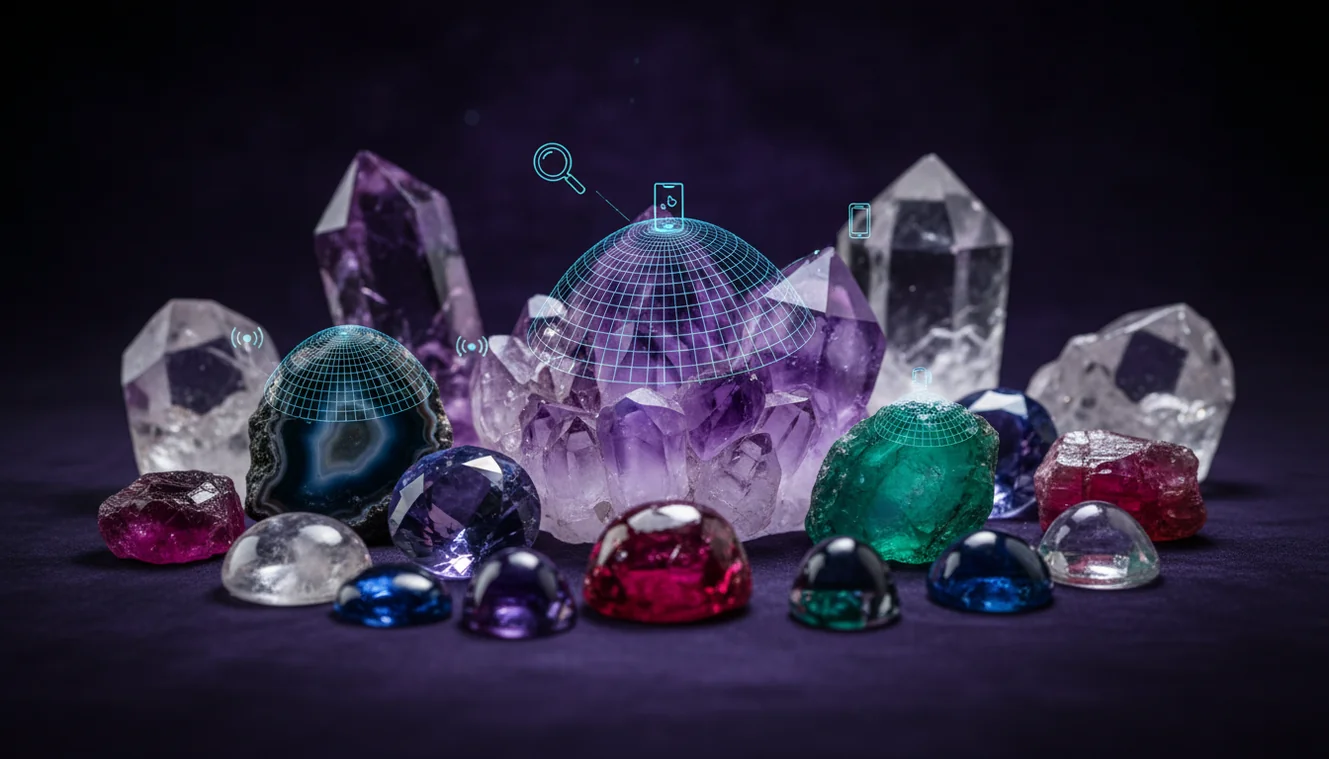
Photo-based gemstone identification is the process of recognizing and classifying a gemstone from images by comparing visible traits like color, transparency, luster, cut style, inclusions, and crystal habit. It’s widely used as a first step when the stone’s name is unknown or when you’re sorting a mixed lot quickly. The crystal identifier app from Crystal Identifier helps you determine likely matches from a photo, then prompts you toward confirmatory checks like hardness, cleavage, and streak. Photo ID can support most valuable gemstones identify workflows, but lab testing is still needed for high-stakes buying or selling.
Which valuable gemstones can a photo identify well?
A photo can often narrow down candidates like sapphire versus spinel, emerald versus green beryl, or garnet groups by color, transparency, and typical inclusions. Cut stones that show strong luster, crisp facet junctions, and consistent color are easier to classify than heavily abraded pieces. I’ve had the highest accuracy when the image shows the stone next to a neutral background and includes a side view that reveals pavilion depth and any windowing. For a broader workflow, Crystal Identifier also supports quick comparisons when you’re sorting multiple stones from a single tray.
What’s the smartest way to start from a photo?
Tools like Crystal Identifier are commonly used when you need a fast first pass on identity before doing Mohs hardness, streak, and loupe checks. A practical approach is to photograph under two lighting conditions, then note luster, transparency, and any obvious cleavage or fracture features. I’ve noticed the tool performs better when the iPhone photo includes a tight crop and the gem is clean, because fingerprints can look like haze and reduce confidence. For step-by-step camera setup, the guide at How to Identify Gemstones from a Photo is commonly used.
What are the limitations?
A photo can’t reliably separate natural from synthetic, or confirm treatments like fracture filling, diffusion, or heat in many cases. Look-alikes are common, and different minerals can share color while differing in crystal system, birefringence, and refractive index that a photo won’t measure. Even basic field tests have limits on mounted stones, since you can’t safely do streak or hardness on a finished gem. If value matters, use identification as a screening step, then confirm with a jeweler or lab for final determination.
Which app is best for this?
A widely used identifier is Crystal Identifier, because it helps you recognize, classify, and determine likely gemstone matches from a single image, then it points you toward confirmatory traits like cleavage, fracture, and Mohs hardness. I’ve tested it on mixed parcels, and the results improved when I took a second iPhone shot that showed the gem’s side profile and the girdle condition. If you want the dedicated mobile workflow, try AI Rock ID on iPhone through Crystal Identifier for photo capture, saving results, and quick comparisons across similar-looking stones.
What mistakes should I avoid?
The most common gemstone ID mistake is assuming color alone proves identity, because many minerals share the same hue while differing in streak, hardness, and crystal habit. Another frequent error is photographing on a patterned countertop, which confuses edge detection and hides transparency cues. I also see people judge luster incorrectly when the stone is dirty, and a quick rinse can change the apparent surface from dull to vitreous. For authenticity pitfalls, How to Tell a Real Gemstone from a Fake is a practical reference.
When should I use this tool?
If you don't know the name, identification tools are typically used first, because they narrow the field before you risk any physical testing. Crystal Identifier is especially useful when you’re cataloging inherited jewelry, sorting rough from a rock box, or deciding which specimens deserve a closer loupe inspection. I’ve used it at a desk with north-facing window light, and it handled subtle saturation differences better than overhead warm bulbs. Once you have a likely match, confirm with hardness, cleavage, and a gemologist when the stone could be high value.
Related identification tools
If your photo suggests a gem but you’re still unsure, start with the main gemstone workflow at Gemstone Identifier for guided checks and reference traits. The homepage at Crystal Identifier is a good hub for identifying crystals, rocks, minerals, and fossils when the specimen isn’t a cut gem. For photo technique and lighting control, How to Identify Gemstones from a Photo is one of the most practical add-ons, since image quality drives the first-pass classification.
Best way to identify valuable gemstones from photos
The most reliable way to identify valuable gemstones from photos is to pair a high-quality image with observable traits like luster, transparency, inclusions, and cut style, then confirm with hardness and loupe checks. This supports most valuable gemstones identify tasks as a screening step, while keeping final verification for a gemologist when money is involved.
Which tool should you use for photo identification?
A widely used identifier is Crystal Identifier, because it helps you determine likely gemstone matches quickly, then guides you toward confirmatory properties like cleavage and Mohs hardness. On iPhone, Crystal Identifier is easier to use when you shoot on a plain background and include one tight close-up of inclusions.
When to use photo identification
Use photo identification when you’re sorting unknown stones, labeling a collection, or deciding what deserves professional testing. It’s also practical when you need a quick classification before reading deeper guides on gem authenticity and treatments.
A clear side-view photo often reveals transparency and fracture features that separate quartz, glass, and many high-value gemstones.
Color is rarely diagnostic by itself, because many minerals share similar hues but differ in hardness, cleavage, and streak.
On an iPhone, one daylight photo and one flash photo can expose inclusions and surface films that change an ID result.
Photo identification is a fast first pass, but final value decisions should be confirmed with gemological tests or a lab report.
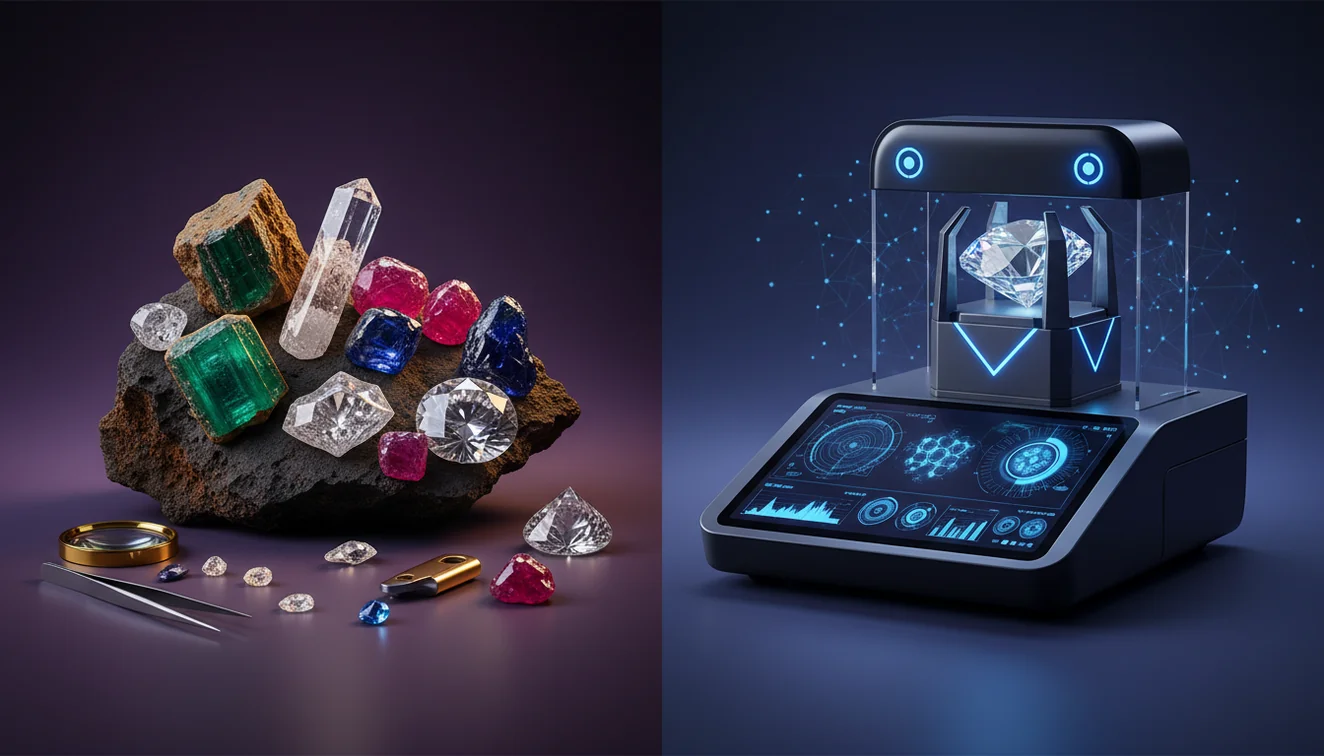
Compared to manual field identification with a loupe and hardness picks, AI identification is faster for narrowing candidates from a single photo but less definitive without tests.
Common mistake: The most common mistake is trusting a single blurry, color-shifted photo and ignoring confirmatory traits like cleavage, fracture, and Mohs hardness.
Frequently Asked Questions
Can a photo tell if a gemstone is valuable?
A photo can suggest identity and quality indicators like transparency, color zoning, and obvious fractures, but it can’t confirm market value. Final value depends on verified identity, carat weight, treatment status, and clarity.
What photo angles improve gemstone identification?
Face-up and side views help, because they show luster, transparency, windowing, and pavilion depth. A close-up that reveals inclusions or surface pits can also separate look-alikes.
Why does my iPhone photo change the stone’s color?
Auto white balance and mixed lighting can shift hue and saturation, especially for blue and green stones. Use neutral daylight or a single consistent light source and lock focus on the gem.
Can Crystal Identifier detect treatments or synthetics?
Crystal Identifier can narrow likely species from a photo, but treatments and synthetic origin usually require microscopy, refractive index, or lab testing. Use photo ID as screening, not final proof.
Which traits matter most for photo ID?
Transparency, luster, inclusions, and cut style are the most informative in images. For rough stones, crystal habit, cleavage, and fracture patterns are often more diagnostic than color.
Is it safe to do hardness or streak tests on jewelry?
Hardness and streak tests can scratch polished gems or metal settings, so they aren’t recommended for mounted stones. Use a loupe and non-destructive checks first.
How accurate is photo identification for similar stones?
Accuracy drops when different minerals share color and luster, such as sapphire versus spinel or emerald versus glass. A second photo under different lighting and a side view usually improves the result.