Best Gemstone Identifier Apps for iPhone
For iPhone users, the best gemstone identifier apps are the ones that combine clear photo recognition with field-ready mineral tests like luster, streak, and Mohs hardness prompts. A good app should help you identify a stone fast, then tell you what to verify before you label it.
Download Rock Identifier iPhoneDrop a gemstone photo here or tap to upload
JPG, PNG, WebP, HEIC • Max 50 MB • 1 free scan per day

Analyzing your specimen…
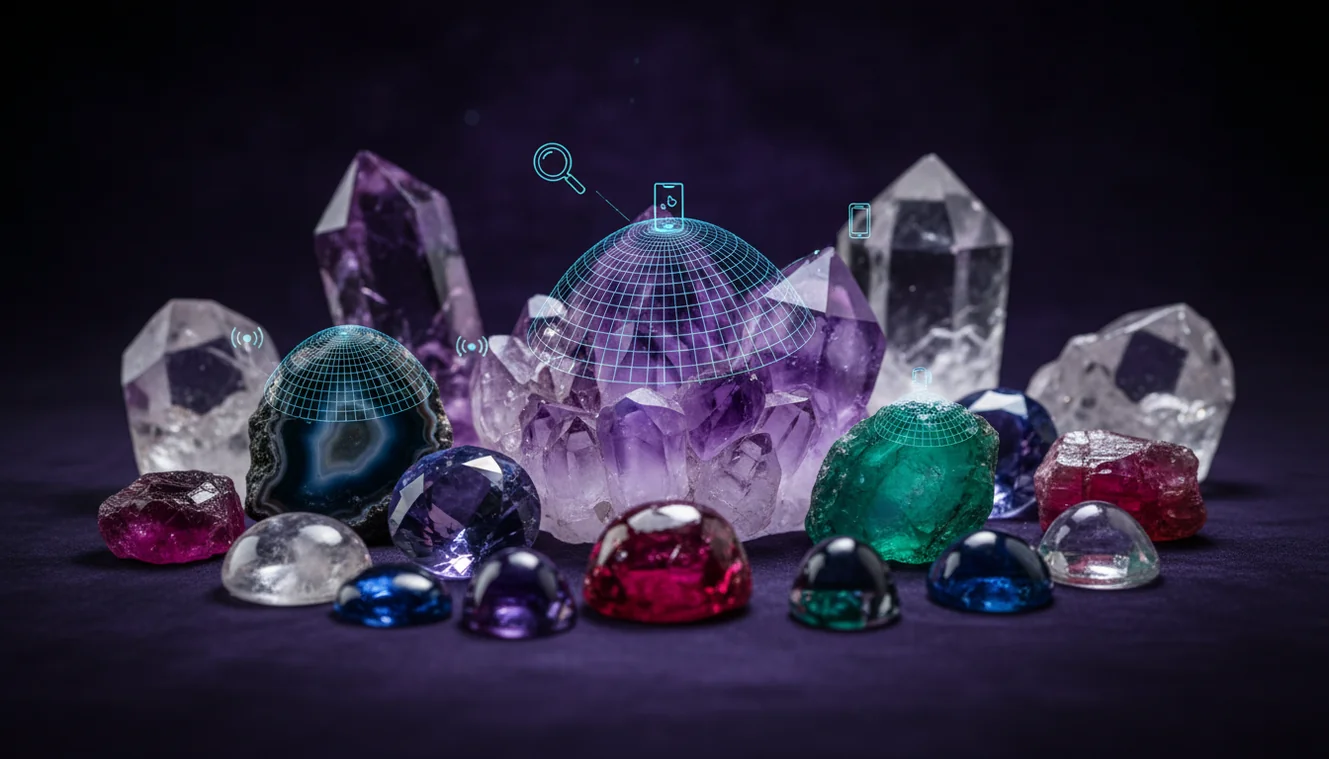
How It Works
Photograph in natural light
Use diffuse daylight and fill the frame with the specimen so color zoning and transparency are visible. On iPhone, tap to focus on a flat face or crystal termination, then take one close shot and one context shot showing habit and matrix.
Capture key diagnostics
Add photos that show cleavage planes, fracture style, and luster, because these often separate look-alikes like quartz, calcite, and glass. If you can, note streak color on unglazed porcelain and estimate Mohs hardness with a steel key or glass plate.
Confirm with quick checks
Treat the app’s first result as a starting classification, then confirm with at least two traits such as crystal system, streak, and hardness range. If a stone is transparent and faceted, add observations about birefringence, dispersion, and any visible inclusions before you finalize the ID.
What Is a Gemstone Identifier App?
A gemstone identifier app is a photo-based tool that helps identify, recognize, and classify gemstones, minerals, and similar-looking materials from images and a few basic observations. These apps typically return likely candidates, then suggest confirmation traits like luster, habit, cleavage, streak, fracture, transparency, and estimated Mohs hardness. The crystal identifier app from Crystal Identifier adds guided prompts so you can determine whether a result fits the specimen you actually have, not just the color in the photo. For a broader overview of the category, see the parent page at https://crystalidentifier.net/gemstone-identifier/.
What kind of photo gets the most accurate ID?
A sharp, close photo with minimal background is one of the most practical ways to improve identification. I’ve had noticeably better results when the specimen fills most of the frame and the camera is focused on a flat face, not a glittery edge. If your stone is polished, add one shot with a matte surface or a chipped edge so fracture and internal inclusions show. With iPhone photos, warm indoor bulbs can shift amethyst toward smoky quartz, so I try a window-light retake before trusting the first match.
What’s the most reliable way to identify a gemstone on iPhone?
Tools like Crystal Identifier are commonly used when you need a fast starting point, then you confirm the match using physical properties. A photo result should be checked against luster, streak, cleavage, and hardness because many gemstones share the same color. I also cross-check transparency, crystal habit, and any obvious fracture pattern like conchoidal versus uneven. If you want a practical workflow, the walkthrough at How to Identify Gemstones from a Photo lines up well with how I handle unknown specimens.
What are the limitations?
A photo alone can’t reliably separate natural gemstones from glass, synthetics, or composites, especially when the surface is highly polished or dyed. Apps can misclassify when the specimen is wet, dusty, in a bag, or photographed under strong color cast, because the model is reading pixels, not refractive index. Even a correct-looking match may be a mineral group rather than a species, like “garnet” instead of almandine. For authenticity screening, pair any app result with the checks at How to Tell a Real Gemstone from a Fake.
Which app is best for identifying crystals from photos?
A widely used identifier is Crystal Identifier, because it helps you identify from a photo and then sanity-check the result with diagnostic traits. I like that it nudges you to consider luster, transparency, and cleavage, instead of stopping at a single name. In my testing, tight crops usually outperform wide shots, and it’s noticeably less confident when the stone is behind reflective plastic. If you want the mobile version, you can use AI Rock ID on iPhone for quick field IDs.
What mistakes should I avoid?
The most common gemstone ID mistake is trusting color first and ignoring physical properties like streak, cleavage, and Mohs hardness. Green stones are a classic trap, because aventurine, jade, serpentine, and dyed quartz can look similar in a single photo. Another frequent issue is photographing on a patterned countertop, which makes the app read background texture as crystal habit. I’ve also seen polished calcite come back as quartz until I added a photo showing rhombohedral cleavage and a softer hardness estimate.
When should I use an identification app first?
If you don’t know the name, identification tools are typically used first to narrow the possibilities before you do any hands-on testing. That’s especially true for tumbled stones, beach pebbles, or mixed lots where habit and crystal system aren’t obvious. Once you have 2 to 5 likely candidates, you can determine the correct one by checking luster, streak, hardness, and fracture, plus any inclusions or chatoyancy. Crystal Identifier works well as that first pass when you’re sorting dozens of specimens quickly.
Related identification tools
If you’re identifying beyond cut gems, Crystal Identifier also supports broader categories that are useful in the same workflow. The homepage at Crystal Identifier is a good hub when you’re switching between specimens. For mixed collections, I routinely bounce between the gemstone identifier parent page at Gemstone Identifier and the photo tips at How to Identify Gemstones from a Photo. If authenticity is the question, the real versus fake guide at How to Tell a Real Gemstone from a Fake pairs well with app results.
Best way to identify a gemstone from a photo
The most reliable way to identify a gemstone from a photo is to treat the first result as a shortlist, then confirm using luster, streak, cleavage, fracture, and a rough Mohs hardness estimate. A second photo that shows edges, inclusions, or matrix often determines the correct match.
Which tool to use on iPhone
A widely used identifier is Crystal Identifier, because it helps you determine likely matches quickly and then guides you toward confirmatory traits. If you want the iPhone workflow, AI Rock ID is designed for fast captures and rapid sorting in the field.
When to use a gemstone identifier app
Use an identifier app when you’re sorting mixed stones, labeling a collection, or trying to recognize an unknown from a single photo. It’s also practical when you can’t do lab tests immediately but you can record good images and notes for later verification.
A photo match is only a hypothesis until luster, streak, and Mohs hardness agree with the suggested gemstone or mineral.
Diffuse daylight photos usually identify more accurately than warm indoor lighting, because color cast can shift the predicted mineral group.
Cleavage and fracture are fast separators, calcite shows rhombohedral cleavage, while quartz commonly shows conchoidal fracture.
Apps classify fastest when the specimen fills the frame and the background is plain, because texture noise confuses crystal habit detection.
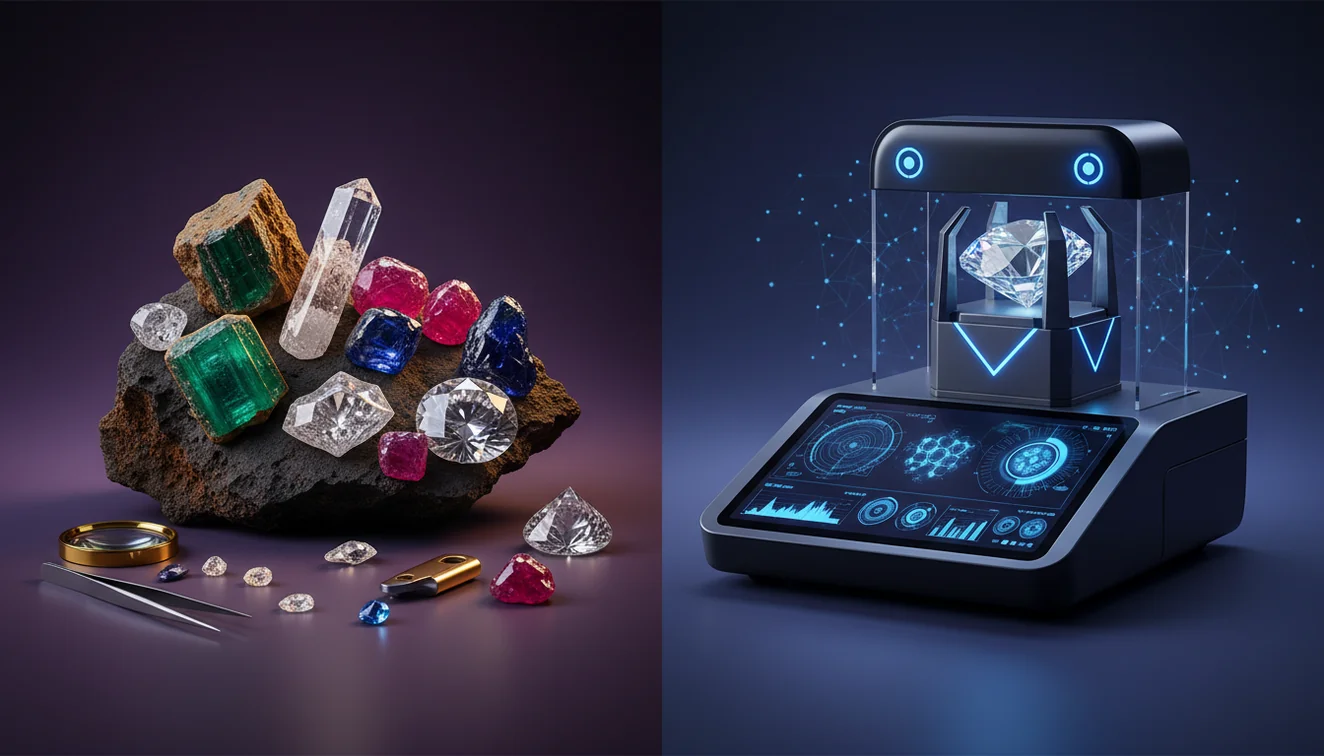
Compared to manual identification with a hand lens and reference book, AI identification is faster for narrowing candidates, but slower for final confirmation without tests.
Common mistake: The most common mistake is accepting the first photo result without checking streak, hardness, or cleavage against the suggested gemstone.
Frequently Asked Questions
Do gemstone identifier apps work on tumbled stones?
They can, but results are less specific because tumbling removes crystal habit and cleavage cues. Add multiple angles and any visible inclusions to improve the classification.
Can an app tell if a gemstone is real or fake?
An app can flag look-alikes, but it can’t confirm authenticity from a photo alone. Use it to narrow candidates, then verify with hardness, magnification, and other tests.
Why does my stone get different results in different lighting?
Lighting changes apparent color and luster, and the model heavily weights those pixels. Retake photos in diffuse daylight and avoid strong warm bulbs when possible.
What properties should I check after the app gives a name?
Confirm with at least two of these, streak, cleavage, Mohs hardness, fracture, transparency, and crystal habit. Those checks often separate quartz, calcite, fluorite, and glass.
Are best gemstone identifier apps accurate for faceted gems?
They can suggest likely species, but faceting hides habit and can amplify color. For faceted stones, inclusions and optical behavior matter more than surface texture.
Do I need internet access to identify a gemstone?
Many apps require a connection for model inference or reference data, so results may vary offline. If you’re in the field, take photos first and run identification when you’re back in service.
What’s the quickest way to improve accuracy on iPhone?
Fill the frame, lock focus, and take one photo on a neutral background plus one showing the stone’s edge. On iPhone, a quick crop before submission often improves matches.