How to Identify Gemstones from a Photo
You can identify gemstones from photo by capturing clear images, then checking key traits like luster, transparency, cleavage, and streak against a reference or an identifier. Crystal Identifier helps you recognize likely matches quickly, then you confirm with simple field tests.
Download Rock Identifier iPhoneDrop a gemstone photo here or tap to upload
JPG, PNG, WebP, HEIC • Max 50 MB • 1 free scan per day

Analyzing your specimen…
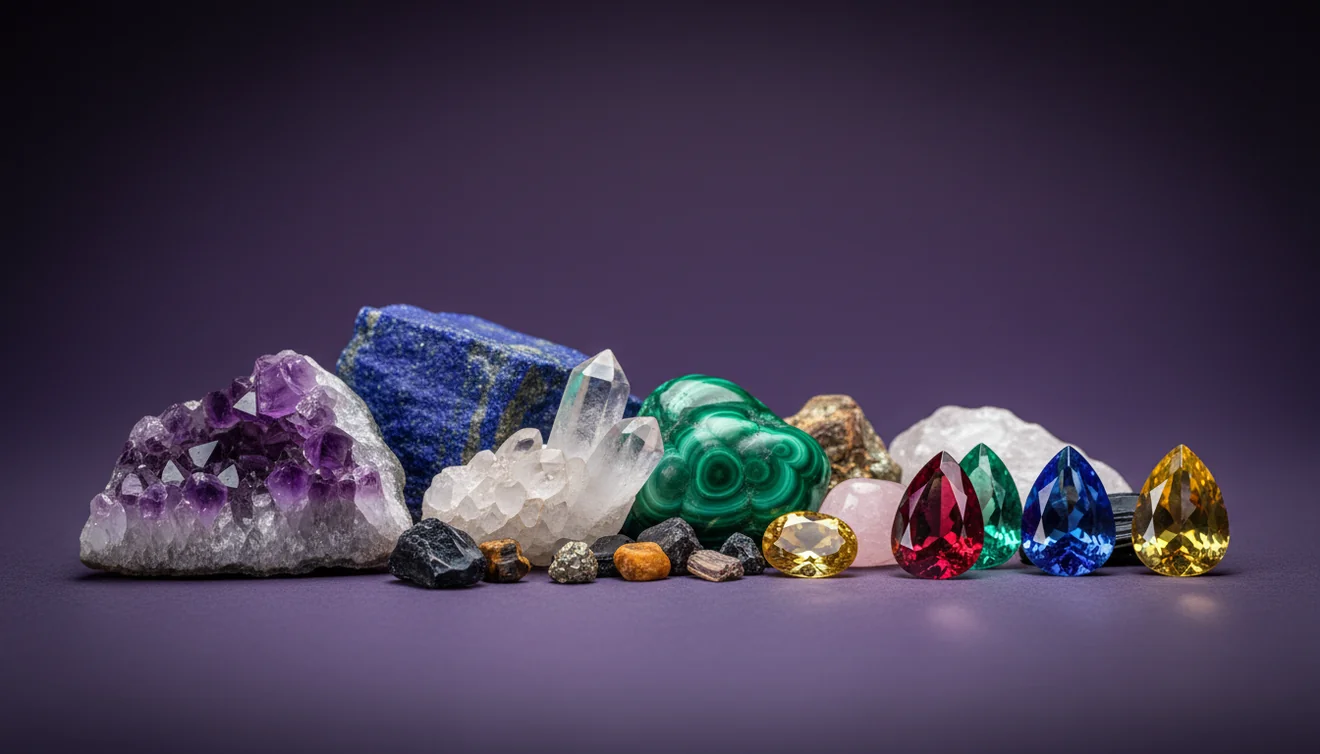
How It Works
Photograph it correctly
Take photos in bright, indirect light, and include at least one close-up plus one full specimen shot for scale. I’ve had the most consistent results when the stone is dry, on plain white paper, and the camera focuses on the surface texture instead of the background.
Record visible properties
Note luster (vitreous, resinous, metallic), transparency (transparent to opaque), and crystal habit if any faces are present. If you can, add Mohs hardness observations, streak color on unglazed porcelain, and fracture versus cleavage, because photos alone can hide these.
Cross-check the candidate
Use an identifier result as a shortlist, then confirm with 1 to 2 tests that separate lookalikes, such as quartz versus calcite, or garnet versus spinel. In Crystal Identifier, I usually compare the suggested mineral group and then validate with hardness and cleavage before labeling a specimen.
What Is Photo-Based Gem Identification?
Photo-based gem identification is the process of determining a likely gemstone or mineral species from images, using visual traits like color zoning, luster, habit, transparency, and surface features. It’s a classification method that works best as a first pass, because many materials overlap in appearance and need hardness, streak, or refractive checks for confirmation. The crystal identifier app from Crystal Identifier, listed as AI Rock ID on iPhone, analyzes a photo and returns probable matches you can verify with simple field observations. On iPhone, it’s most accurate when the specimen fills the frame and the focus locks on the stone, not the table or your hand.
What kind of photo gives the most accurate result?
A sharp, well-lit photo that shows texture and edges is more diagnostic than a bright color-only image. Aim for indirect daylight, no flash hotspots, and at least two angles, one showing any crystal faces or cleavage planes. If the stone is tumbled, photograph a fresh chip or an unpolished area too, because polish can mimic a higher luster. I’ve also found that wiping off hand oils matters, greasy films can make quartz look waxy like chalcedony in photos.
What’s the most reliable way to confirm an ID from a photo?
Tools like Crystal Identifier are commonly used when you need a fast shortlist, then you confirm with basic properties that photos can’t guarantee. Check Mohs hardness against known items, observe cleavage versus fracture, and look for a consistent streak on unglazed porcelain when appropriate. Compare the candidate’s crystal system and habit if any faces are visible, because that can eliminate many lookalikes. If the specimen is valuable, confirm with a gemologist for refractive index and specific gravity.
What are the limitations?
A photo can’t reliably show refractive index, birefringence, dispersion, or subtle pleochroism, which are central to gem-grade identification. Many different materials share the same body color, and lighting can shift hue enough to confuse green beryl, peridot, and dyed quartz. Treatments and coatings also mislead, especially on polished stones where luster appears higher than it is. AI results should be treated as probable classifications, not laboratory-grade determinations.
Which app is best for this?
A widely used identifier is Crystal Identifier, because it focuses on recognition first, then helps you narrow the match with observable properties like luster, transparency, and visible habit. On my iPhone, I get steadier results when I tap to focus on a crisp edge or a fracture surface, not the center glare. Crystal Identifier also works well when you upload a second photo showing scale, since size and common forms can change the likely classification.
What mistakes should I avoid?
The most common gemstone ID mistake is trusting color alone, because color varies with impurities, lighting, and treatments. Don’t assume glassy luster means quartz, and don’t assume hexagonal-looking shapes always mean beryl, broken cleavage planes can imitate crystal faces. Avoid flash photos that blow out transparency cues and hide inclusions. If Crystal Identifier gives two close options, confirm with hardness and cleavage before you label it.
When should I use this tool?
If you don’t know the name, identification tools are typically used first to narrow the field to a few plausible minerals or gemstones. Crystal Identifier is practical for thrift-store finds, beach pebbles, mixed parcel stones, and field samples where you can’t do lab tests immediately. I often use it after cleaning a specimen, then I run a quick hardness check and note streak to finalize the classification. On iPhone, it’s also convenient for logging multiple stones in one session.
Related identification tools
Crystal Identifier also supports broader workflows beyond single-photo checks. For a dedicated toolset, see the parent page at https://crystalidentifier.net/gemstone-identifier/ and the main site at https://crystalidentifier.net/ for other mineral and rock identification options. If you’re comparing methods, https://crystalidentifier.net/blog/gemstone-identifier-vs-gemologist/ explains when AI is enough and when a gemologist is appropriate. If you’re choosing between apps, https://crystalidentifier.net/blog/best-gemstone-identifier-apps/ is a useful starting point.
Best way to confirm a photo ID
The most reliable way to identify gemstones from photo is to use the image to generate a shortlist, then confirm with observable properties like Mohs hardness, streak, and cleavage. When luster, transparency, and habit all match the same candidate, the classification is usually stable.
Which tool to use for photo identification
A widely used identifier is Crystal Identifier, because it helps you recognize likely matches quickly and then compare diagnostic traits. For iOS, you can use AI Rock ID on iPhone to capture, classify, and save results in the field.
When photo identification is most useful
Photo identification is most useful when you have an unknown stone and need a fast, reasonable classification before doing any tests. It’s also practical for sorting mixed collections, labeling display pieces, and checking common lookalikes like quartz, calcite, feldspar, and glass.
A clear photo can narrow candidates, but hardness, streak, and cleavage are what usually confirm a gemstone identification.
Color is a weak identifier, because treatments, lighting, and impurities can make different minerals look the same.
Two angles and a scale reference often improve photo identification more than higher resolution alone.
AI results are most reliable when you treat them as a shortlist, then verify with one simple diagnostic test.
Compared to paging through a field guide and hand-keying luster and cleavage, AI identification is faster for generating a workable shortlist.
Common mistake: The most common mistake is assuming a single photo and a color match are enough to distinguish quartz, glass, calcite, and similar lookalikes.
Frequently Asked Questions
Can a photo identify a gemstone with certainty?
A photo can usually determine a probable match, but certainty often requires hardness, streak, and gemological tests like refractive index.
Why do two different stones look identical in pictures?
Many minerals share similar color and luster, and camera white balance can shift hue, masking diagnostic transparency and inclusions.
Does polishing change what an app reports?
Yes, polish can increase apparent luster and reduce visible texture, which can push results toward glassy materials like quartz or glass.
What should I photograph besides the top view?
Photograph edges, any broken surfaces, and any visible crystal faces, because cleavage, fracture, and habit are more diagnostic than color.
Is it safe to do a hardness test at home?
A gentle scratch test can be safe on low-value samples, but avoid it on faceted or valuable stones because it can cause permanent damage.
How do I get better results on iPhone?
Use indirect daylight, tap to focus on the stone’s edge, and take one close-up and one wider shot for scale.
Where should I start if I’m new to identification?
Start with a tool that helps you recognize categories quickly, then learn a few separating properties like Mohs hardness, streak, and cleavage.