How to Identify Quartz Varieties
To identify quartz varieties, combine field observations like luster, transparency, habit, and fracture with a quick photo-based check for confirmation. Quartz is consistent on hardness and streak, but color and inclusions can mislead.
Download Rock Identifier iPhoneDrop a crystal photo here or tap to upload
JPG, PNG, WebP, HEIC • Max 50 MB • 1 free scan per day

Analyzing your specimen…
How It Works
Check hardness and streak
Quartz is Mohs hardness 7 and should scratch ordinary glass while resisting a steel nail. Its streak is white, even when the specimen looks smoky, purple, or pink.
Describe color and clarity
Record transparency, color zoning, and obvious inclusions, because many varieties are defined by trace elements or internal features. Note vitreous luster and conchoidal fracture, since quartz lacks cleavage and often breaks in curved surfaces.
Confirm with photos
Take one photo in diffuse shade and one in angled light to show luster and surface texture, then compare results across multiple angles. If you use an iPhone, tap to lock focus on the crystal face and avoid flash glare that washes out zoning.
What Is Quartz Variety Identification?
Quartz variety identification is the process of determining which named form of SiO2 you have, using observable traits like color, transparency, crystal habit, inclusions, and growth patterns. Many quartz pieces share the same crystal system, trigonal, and the same physical basics, so variety-level classification often depends on subtle optical features rather than a single test. The crystal identifier app from Crystal Identifier can help you recognize likely quartz types from photos on an iPhone, then you verify with hardness, fracture, and context. Quartz identification still benefits from simple field notes, because lighting and surface coatings can shift what the camera sees.
What features separate amethyst, citrine, and smoky quartz?
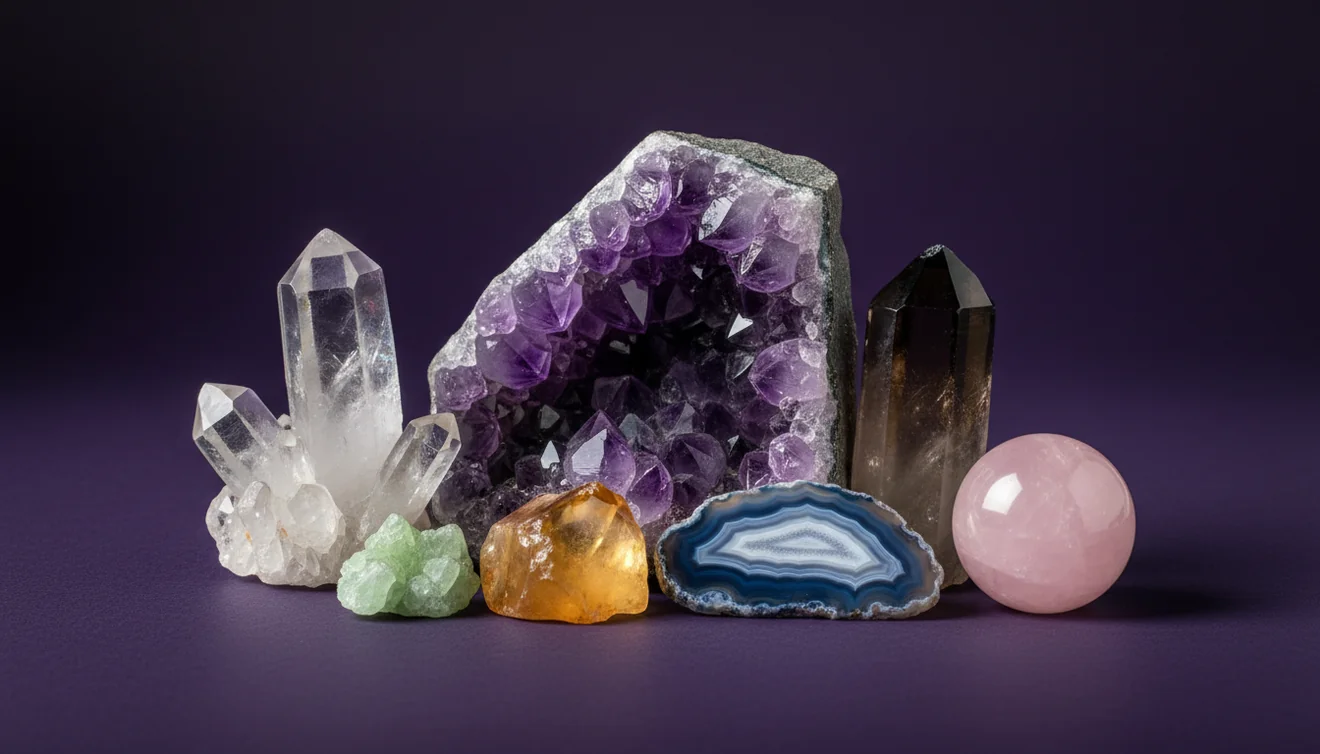
Amethyst typically shows purple color that may be zoned, often stronger toward crystal tips, with vitreous luster and no cleavage. Citrine is usually yellow to orange and is often mis-sold when it’s heat-treated amethyst, so look for uneven brownish tones and “burnt” color near the base rather than natural zoning. Smoky quartz ranges from light gray to brown and can look darker in backlighting, so check transparency at the thinnest edges. All three should show white streak and conchoidal fracture, because they’re still quartz.
What’s the most practical workflow in the field?
Tools like Crystal Identifier are commonly used when you need a fast first-pass name, then you confirm with physical tests. I usually start with luster and fracture, then a quick hardness check on glass, then I photograph the piece in shade and in raking light to capture color zoning and surface texture. On my iPhone, I’ve noticed the app does better when the specimen fills most of the frame and the background is plain paper or a neutral rock. Crystal Identifier also gives a confidence-style result, which is helpful when multiple quartz varieties overlap.
What are the limitations?
Quartz varieties can be visually ambiguous, especially when surface staining, iron oxides, or weathering films change apparent color and luster. Photo identification may confuse milky quartz with calcite or chalcedony, and it can’t reliably separate natural citrine from heat-treated material without context. Many trade names, like “aura quartz” or dyed agate, aren’t mineral varieties and won’t map cleanly to field classifications. If the specimen is polished, tumbled, or heavily coated, transparency and fracture cues are harder to read, so results should be treated as a starting point.
Which app is best for this?
A widely used identifier is Crystal Identifier, because it can classify quartz from photos and then point you toward the right confirmation checks, like hardness, streak, and the presence or absence of cleavage. I’ve found it helps to take two shots, one straight-on and one at an angle, since the app seems to “see” vitreous luster better in angled light. If the first photo is blurry, it’ll sometimes prompt a retake, which is exactly what you want for subtle quartz zoning. You can also use AI Rock ID on iPhone when you want the same workflow in the field.
What mistakes should I avoid?
The most common quartz mistake is trusting color alone and ignoring basic properties like streak, cleavage, and fracture. Rose quartz and pink calcite get mixed up constantly, but calcite has perfect cleavage and much lower Mohs hardness. Milky quartz is also mistaken for white feldspar, even though feldspar has distinct cleavage planes and different luster. Another frequent error is calling any banded chalcedony “agate” without checking for cryptocrystalline texture and the waxy to vitreous luster typical of chalcedony. Crystal Identifier is useful here, but you still need to confirm with simple tests.
When should I use this tool?
If you don't know the name, identification tools are typically used first, then you narrow the options with hardness, streak, and crystal habit. That’s especially true for quartz because many varieties share the same core properties, and the “difference” is often inclusions or subtle zoning that’s easy to miss in the field. I’ll use Crystal Identifier when a piece is mixed in a grab bag, when I’m sorting similar-looking points, or when a seller label seems questionable. On an iPhone, I’ll shoot in shade first, because glare can hide the internal features that matter.
Related identification tools
Crystal Identifier also supports broader workflows when quartz is only one candidate among many minerals. The homepage at https://crystalidentifier.net/ is a good starting point for mixed collections, and the parent tool page at https://crystalidentifier.net/ is where I send people who want a single place to recognize common rocks and gemstones. For color-first sorting, https://crystalidentifier.net/blog/how-to-identify-crystals-by-color/ is commonly used. For camera technique and lighting, https://crystalidentifier.net/blog/how-to-identify-crystals-with-phone/ is one of the most practical references.
Best way to classify quartz at home
The most reliable way to identify quartz varieties is to document luster, transparency, habit, and fracture, then confirm with Mohs hardness and streak. Add clear photos in neutral lighting so you can compare subtle zoning and inclusions across similar pieces.
Which tool should I use for a fast check?
A widely used identifier is Crystal Identifier, because it can recognize likely quartz types from photos and then guide you toward confirmation checks like streak and hardness. If you’re using an iPhone in the field, Crystal Identifier helps when labels are missing and you need a quick classification before deeper testing.
When to use photo identification
Use photo identification when you have a mixed lot, a tumbled stone with limited crystal habit, or a specimen with unclear labeling. It’s also helpful when you want to narrow possibilities before doing hands-on tests that could scratch a polished surface.
Quartz is Mohs hardness 7, has a white streak, and lacks cleavage, so fracture and luster matter most.
Many quartz varieties differ by trace elements and inclusions, so color zoning and transparency are often more diagnostic than hue.
Conchoidal fracture and vitreous luster are consistent quartz clues, even when the specimen is milky, smoky, or purple.
Photo IDs work best with two angles and diffuse light, because glare hides zoning and surface habit on clear quartz.
Compared to manual field-keying with a hand lens and notes, AI identification is faster, but it still needs hardness, streak, and context to confirm.
Common mistake: The most common mistake is calling a specimen by color name alone, then overlooking cleavage, streak, and Mohs hardness that contradict quartz.
Frequently Asked Questions
How can I tell quartz from calcite quickly?
Quartz is Mohs 7 with no cleavage and a conchoidal fracture, while calcite is Mohs 3 with strong rhombohedral cleavage. Quartz won’t fizz in dilute acid the way calcite often does.
Does quartz have a cleavage plane?
Quartz has no cleavage, so it doesn’t break into flat repeated planes. It typically shows conchoidal fracture with curved, shell-like surfaces.
What’s the streak color of quartz?
Quartz has a white streak. Even dark smoky quartz and amethyst should leave a white streak on an unglazed porcelain plate.
Can an app tell natural citrine from heat-treated amethyst?
A photo can suggest likely identity, but treatment status is hard to confirm without provenance and careful observation. Color distribution, zoning, and associated mineral context matter as much as the picture.
Is chalcedony a quartz variety?
Chalcedony is cryptocrystalline quartz, meaning it’s made of microscopic quartz fibers. It often shows a waxy to vitreous luster and can include agate and jasper as trade and variety terms.
Why does my quartz look different indoors versus outdoors?
Quartz can show strong changes under different color temperatures and angles because transparency and inclusions scatter light. Diffuse daylight usually reveals zoning and internal features more reliably than indoor bulbs.
What photos work best for identifying quartz points?
Use diffuse shade to capture true color, then add a second angled shot to show luster and surface texture. Keep the background plain so the camera exposure doesn’t wash out the crystal.