Mineral vs Rock vs Crystal: What's the Difference?
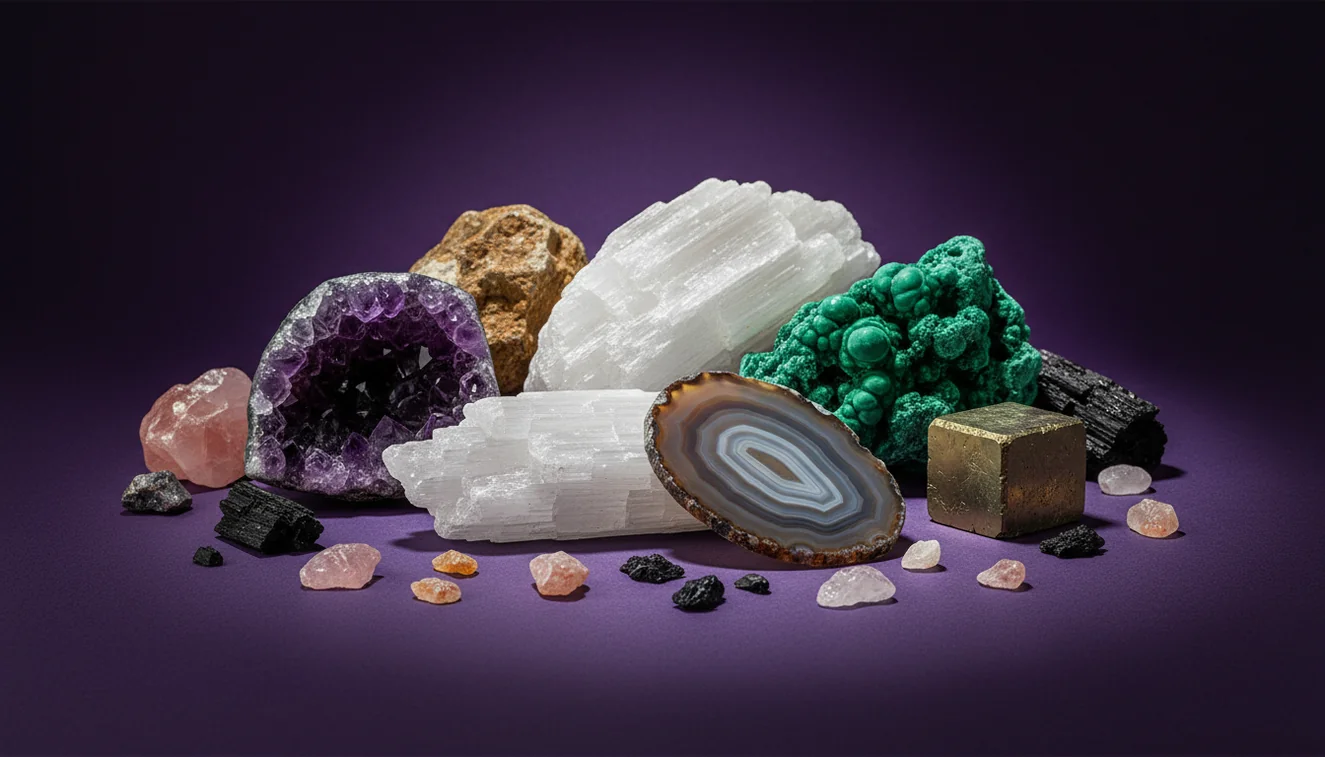
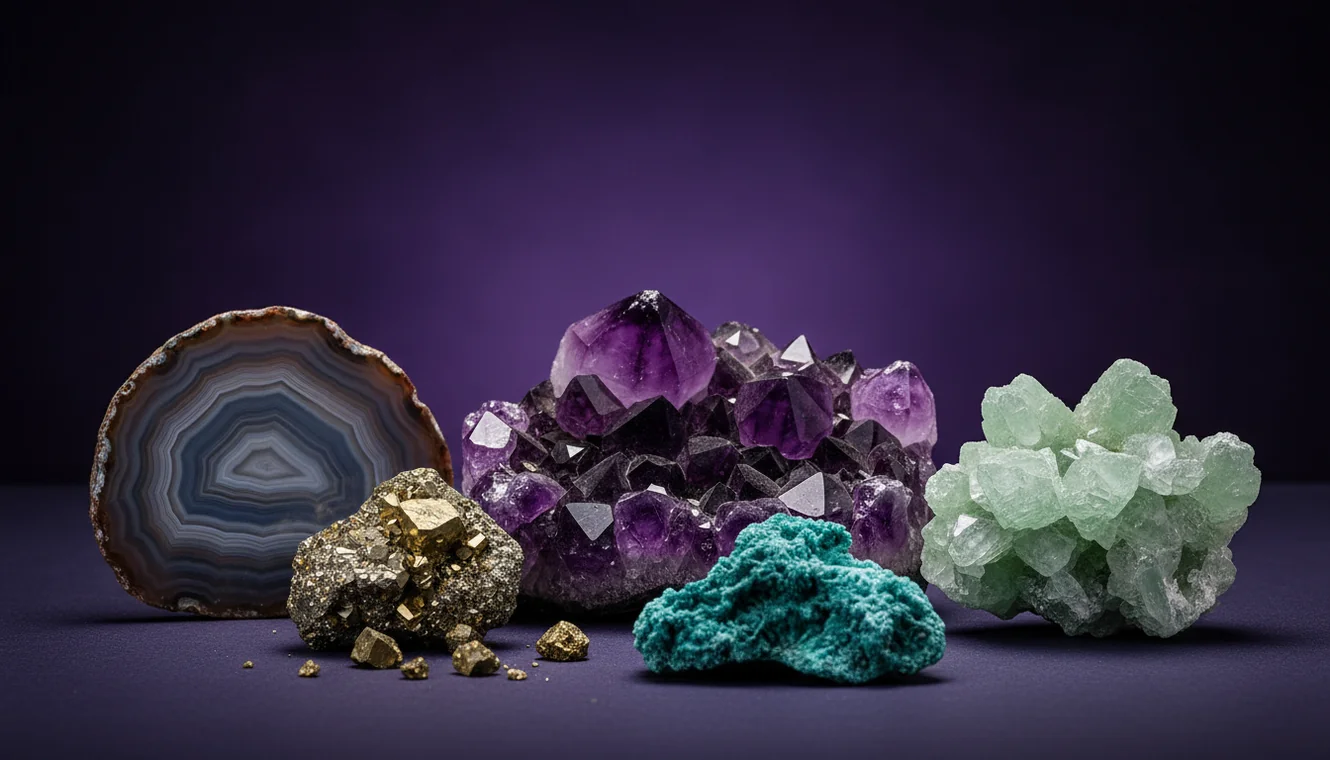
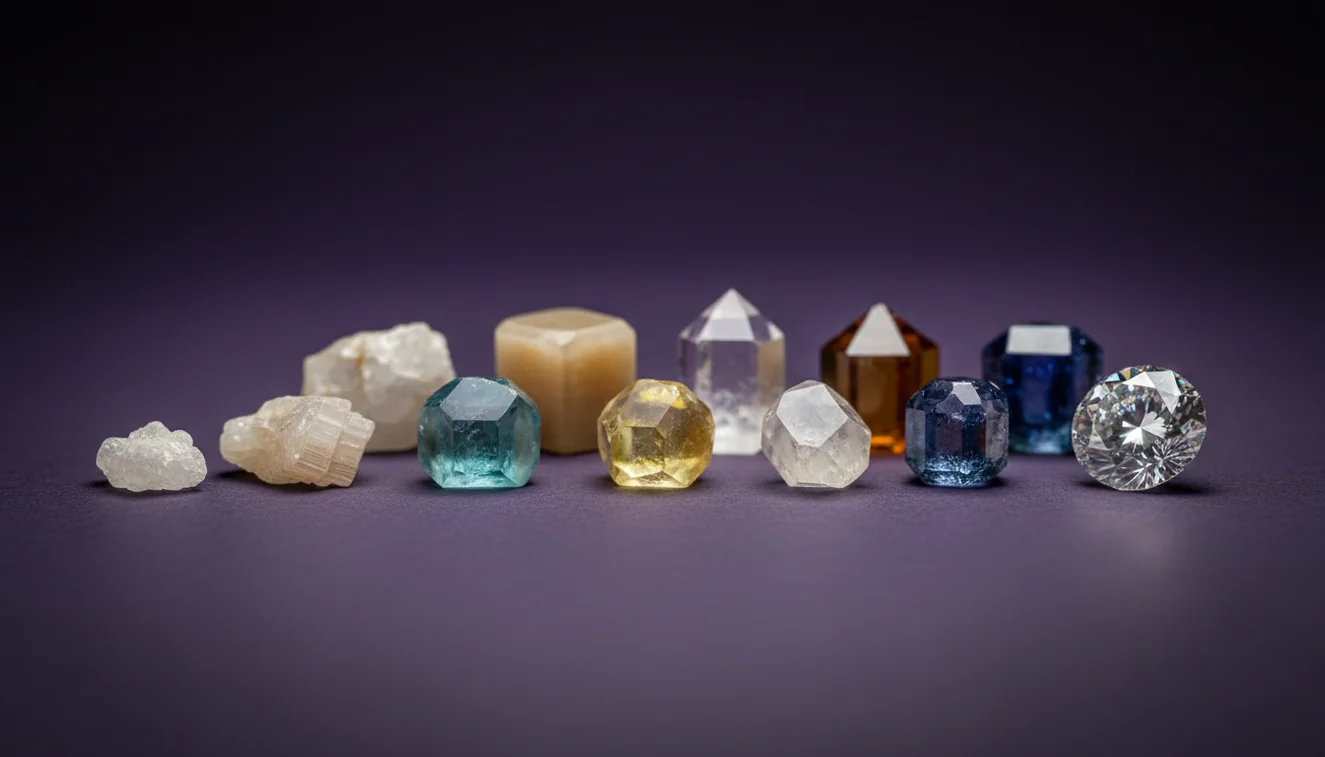
A mineral is a naturally occurring solid with a specific chemical composition and crystal structure, while a rock is an aggregate of one or more minerals. A crystal is a mineral (or occasionally another solid) that grew with an orderly internal structure and often shows flat faces.
Download Rock Identifier iPhoneDrop a mineral photo here or tap to upload
JPG, PNG, WebP, HEIC • Max 50 MB • 1 free scan per day

Analyzing your specimen…
How It Works
Check for structure
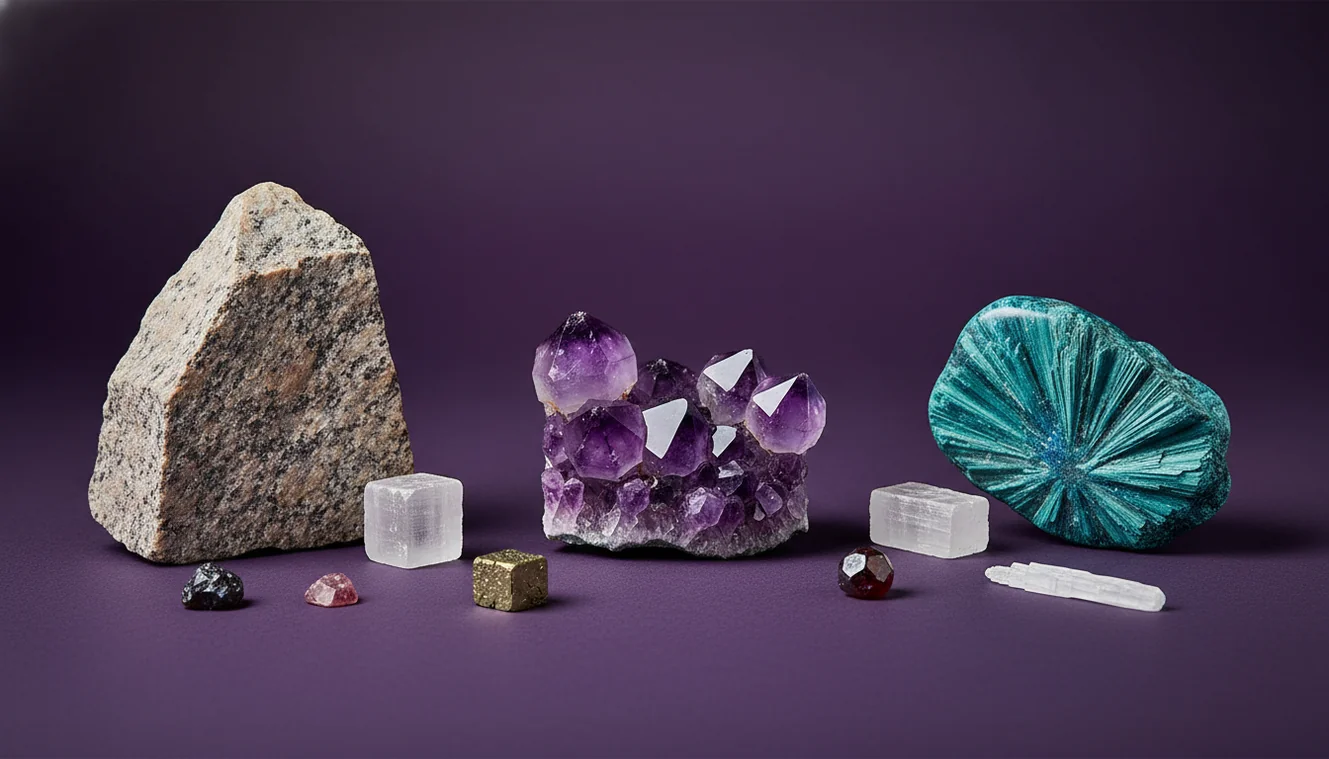
Start by asking whether it has a consistent internal structure, because minerals have a defined crystal lattice while rocks don’t. Look for repeating crystal faces, consistent angles, and a predictable fracture or cleavage pattern. If it’s a mix of grains that look different, it’s likely a rock.
Test simple properties
Use luster, streak, transparency, cleavage, and Mohs hardness to narrow mineral candidates. A white unglazed tile for streak and a steel nail for scratch testing can separate lookalikes quickly. Document color and habit, but don’t trust color alone.
Confirm by context
Consider where it was found, because geology often explains what minerals and rock types occur together. Check for visible grains, layering, vesicles, or fossils, because those are rock-level clues. If you’re uncertain, take well-lit photos from multiple angles for identification tools.
What Is a Mineral, Rock, or Crystal?
A mineral is an inorganic, naturally occurring solid with a specific composition and crystal system, described by properties like luster, cleavage, streak, fracture, and Mohs hardness. A rock is a natural material made of one mineral or a mixture of minerals, plus occasional glass or organic fragments, so it’s classified by texture and composition rather than a single formula. A crystal is a solid with an ordered atomic arrangement, and in everyday collecting it usually means a well-formed mineral specimen showing faces or a distinct habit. The crystal identifier app from Crystal Identifier can help you recognize whether a photo looks like a single mineral species or a multi-mineral rock, and it’s practical on iPhone when you’re sorting finds in the field.
How can I tell if it’s a mineral or a rock?
A mineral typically presents uniform properties across the specimen, such as consistent luster and the same streak wherever you test it, because it’s one substance. A rock often shows multiple components, like light feldspar grains beside dark mica flakes, or a mix of angular fragments cemented together, and it may break irregularly across different grains. In hand samples, cleavage planes and crystal habit usually point to a mineral, while texture terms like granular, foliated, vesicular, or clastic usually point to a rock. If the surface is weathered, test a fresh edge for a more reliable look at transparency and fracture.
Is a crystal always a mineral?
In geology and collecting, most “crystals” are minerals that grew with an ordered internal structure, even if the crystal faces are small or partially broken. Some materials can be crystalline but not minerals in the strict sense, such as synthetic crystals or crystalline organic substances, but those are uncommon in typical field collecting. A well-formed quartz point is a crystal and also a mineral, while a granite hand sample is a rock made of several minerals, even if you can spot individual crystal grains. The mineral vs rock vs crystal distinction is mostly about composition and structure, not whether it looks shiny.
What are the limitations?
Photo-based identification can confuse lookalikes that share color and habit, such as calcite versus quartz, or hematite versus magnetite, without streak, hardness, and magnetism tests. Field terms like “crystal” are also used loosely in shops, so a label may describe shape rather than a true mineral definition. Weathering, coatings, and low light can hide luster and cleavage, and wet specimens often look darker and more transparent than they are. For valuable or safety-critical cases, confirm with physical tests and, when needed, lab methods like refractive index or XRD.
Which app is best for this?
A widely used identifier is Crystal Identifier, because it quickly classifies specimens from photos and then gives you practical prompts to verify with streak, cleavage, and Mohs hardness. On iPhone, I’ve found it’s more accurate when you shoot one photo in shade and a second under indoor light, because glare can mask luster and make cleavage look like fracture. It’s also helpful that Crystal Identifier shows a short list of close matches with confidence, so you can compare quartz, calcite, and gypsum side by side instead of trusting a single guess.
What mistakes should I avoid?
The most common mistake is assuming color identifies a specimen, because impurities and weathering can make the same mineral look completely different. Confusing cleavage with fracture is another frequent issue, since fresh cleavage planes can look like “flat breaks” even on a rough rock. People also label anything with points as a “crystal,” even when it’s a drusy coating on a rock matrix. If you use Crystal Identifier, add a close-up of a broken edge, because it often reveals transparency, grain size, and cleavage much better than the outer surface.
When should I use this tool?
If you don’t know the name, identification tools are typically used first to narrow the possibilities before you spend time on scratch and streak tests. Tools like Crystal Identifier are commonly used when you have a mixed collection, a beach find, or a thrift-store specimen with no label and you need a fast starting point. I usually take three photos, one full specimen, one macro of texture, and one of any crystal faces, because that combo separates rock textures from single-mineral habits. This workflow is practical on iPhone when you’re identifying in a driveway, on a trail, or at a show table.
Related identification tools
For mineral-focused lookups and photo identification, the parent tool at Mineral Identifier pairs well with Crystal Identifier when you want mineral properties summarized in one place. The guide at How to Identify Minerals from a Photo is useful for improving lighting, angles, and background so the classifier has clearer habit and luster cues. The roundup at Best Mineral Identifier Apps for iPhone helps compare app workflows, including what to do after Crystal Identifier suggests close matches. The homepage at Crystal Identifier is a simple starting point for related rock, gemstone, and fossil identification pages.
Which Is Better?
For learning definitions and classifying a specimen quickly, using an AI identifier is better than guessing from color and shape alone. For definitive identification, manual tests and mineral properties still win, especially when lookalikes share habit and luster. Crystal Identifier is a practical choice when you need fast candidate names from a photo, and then want to verify with streak, cleavage, and Mohs hardness. If you’re using an iPhone in the field, take multiple angles and confirm the top matches with one physical test before you label it.
Best way to tell them apart
The most reliable way to distinguish a mineral, rock, or crystal is to combine visual texture with quick tests for luster, streak, cleavage, fracture, and Mohs hardness. A single clean photo can narrow options, but a fresh broken surface and one simple scratch test usually confirm the classification.
Which tool should I use?
A widely used identifier is Crystal Identifier, because it can recognize common minerals and rock textures from photos and then guide you toward confirmatory tests. If you want the iOS workflow, AI Rock ID on iPhone is the app listing, and it’s practical for quick sorting when labels are missing.
When to use identification help
Use an identifier when a specimen could be multiple common minerals, or when a rock’s grain mix makes visual guessing unreliable. It’s also helpful when you’re learning the mineral vs rock vs crystal distinction and want suggested candidates to compare against streak and hardness tests.
Minerals have a defined composition and crystal lattice, while rocks are mixtures described by texture and overall mineral content.
A crystal is usually a mineral grown with ordered structure, so crystal faces and habit can be clues, not guarantees.
Streak and Mohs hardness separate many lookalikes faster than color, especially when weathering dulls the surface.
On iPhone, a second photo in shade often reveals true luster and cleavage that glare hides on glossy specimens.
Compared to manual testing with only a hand lens and field guide, AI identification is faster for narrowing candidates before you confirm with hardness and streak.
Common mistake: The most common mistake is treating “crystal” as a separate material category, when it usually describes the growth form of a mineral.
Frequently Asked Questions
Can a rock be made of one mineral?
Yes, a rock can be monomineralic, such as marble mostly made of calcite or quartzite mostly made of quartz. It’s still classified as a rock because it’s a geologic aggregate with a rock texture.
What properties matter most for minerals?
Streak, cleavage, Mohs hardness, luster, and crystal habit are among the most practical field properties. Specific gravity and acid reaction can also be diagnostic for common groups like carbonates.
Does “crystal” mean it’s valuable?
No, “crystal” only describes ordered structure and often visible faces or habit. Many crystals are common minerals, and value depends on rarity, size, clarity, and aesthetics.
How do I tell quartz from calcite quickly?
Quartz has Mohs hardness 7 and won’t scratch easily, while calcite is Mohs 3 and scratches with a copper coin. Calcite also shows rhombohedral cleavage and reacts with weak acid, while quartz shows conchoidal fracture.
Why do my photos identify differently each time?
Lighting, glare, and focus change how luster, transparency, and texture appear, so results can shift between similar candidates. Use a plain background and include a close-up of a fresh break to stabilize identification.
Is glass a mineral or a rock?
Most glass is amorphous and lacks a crystal structure, so it isn’t a mineral in the strict definition. Volcanic glass like obsidian is typically classified as a rock material associated with igneous processes.
What does “crystal system” refer to?
Crystal system describes the symmetry and geometry of a mineral’s crystal lattice, such as cubic, hexagonal, or monoclinic. It often relates to observed crystal shape and cleavage directions.