
Rock Identifier: Identify Any Rock from a Photo
Point your camera at any rock and let AI do the rest. This free AI rock identifier analyzes grain structure, color distribution, luster, and surface texture from a single photo. Scan trail finds, beach pebbles, backyard specimens, or gem show purchases and get the rock type, mineral composition, Mohs hardness, and an estimated value range in seconds.
Download Free AppDrag & Drop or Click to Upload
JPG, PNG, WebP, HEIC • Max 50 MB • 1 free scan per day

Analyzing your rock…
How the Rock Identifier Works
Snap a Clear Photo
Hold the rock in natural light or set it on a plain surface. Brush away dirt and debris. If the surface appears dull, mist it with water to bring out grain contrast, color banding, and mineral boundaries the AI needs for an accurate match.
AI Analyzes the Specimen
The rock identification engine evaluates grain size, crystal structure, color distribution, luster type, and fracture geometry. It cross-references these features against a verified database of thousands of rock and mineral types to find the closest match.
Receive Full Results
You get the rock name, classification (igneous, sedimentary, or metamorphic), primary mineral composition, Mohs hardness, formation environment, and an estimated value range. If confidence is lower, the scanner lists ranked alternatives.
What Is a Rock Identifier
A rock identifier is a tool that analyzes a photograph of a rock specimen and returns its name, geological classification, mineral composition, Mohs hardness, and estimated market value.
I have spent years sorting through buckets of field specimens, road cuts, and riverbed gravel. After a while, you develop an eye for grain size, for the way light slides across a freshly broken surface, for the weight in your hand that separates dense gabbro from porous pumice. An AI rock identifier reads the same diagnostic features, except it does it from a single photograph and finishes before you can set the rock back down.
The engine looks at things most people skip. The boundary between mineral grains tells the story of cooling rate. Coarse interlocking crystals mean the magma cooled slowly underground. A glassy surface with no visible grains means it cooled in seconds at the surface. Visible layering and rounded particles point to a sedimentary origin. Wavy mineral bands that shimmer when tilted reveal metamorphic foliation. These are the same cues taught in introductory petrology, applied at machine speed.

How AI Reads Rock Texture and Composition
Where it gets genuinely useful is in the gray zones. Someone picks up a pale, medium-grained rock on a hike and guesses "granite." Could be. Could also be granodiorite, tonalite, or diorite depending on the feldspar-to-quartz ratio. The free rock scanner evaluates the visible mineral proportions and narrows that guess into a specific rock identification with supporting data.
Photo-based rock identification is reliable for common specimens but cannot distinguish minerals with identical visual properties. A scratch test or acid test may still be required for confirmation.
Upload a rock photo above, and the AI rock identifier handles the rest. No login, no download, one free scan per day.
Rock Identifier App
The same AI rock identification engine that powers this page is available as a mobile app. The free rock identifier app runs on iOS and Android, giving you the same rock name, classification, hardness data, and value estimate directly from your phone camera. No browser needed.
Inside the AI rock identifier app you get a scan history that logs every specimen you have identified, a built-in reference library with over 4,000 rock and mineral entries, and the ability to ask follow-up questions about any result. Subscribers unlock unlimited scans. The free version provides multiple scans per day at no cost.
Whether you are standing over a creek bed, browsing a mineral show, or sorting through a bucket of specimens in your garage, the free rock identifier app puts a geologist-level answer in your pocket. Download it once and it works offline for cached results.
Download Free Rock Identifier AppUnderstanding Rock Identification
Igneous Rocks: Reading Cooling History
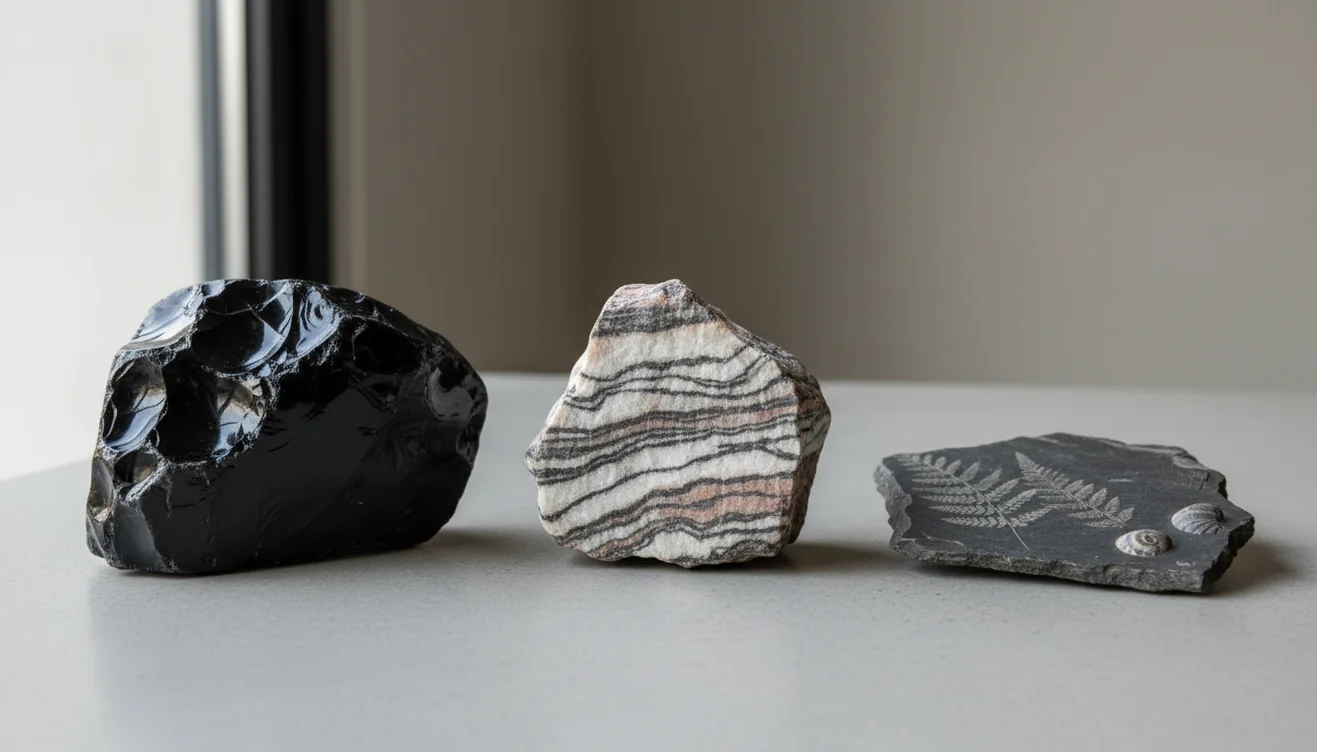
The grain size of an igneous rock is a direct record of how fast it cooled. Granite cooled over thousands of years deep underground, giving each mineral crystal time to grow large enough to see. Basalt erupted at the surface and solidified in days or hours, leaving grains too fine to distinguish without a hand lens. Obsidian cooled so fast it froze as volcanic glass with no crystals at all. A single glance at texture tells you the entire thermal story.
Sedimentary Clues: Layers and Grains
Sedimentary rocks record the environments where they formed. Round, well-sorted sand grains cemented tightly suggest a beach or dune. Angular, poorly sorted fragments embedded in a fine matrix point to a landslide or glacial till. Limestone made entirely of shell fragments tells you a shallow tropical sea once covered that spot. These clues survive billions of years when you know how to read them.
Metamorphic Textures: Pressure and Heat
Metamorphic rocks carry the signature of forces that reshaped them. Slate splits into flat sheets because clay minerals realigned under directed pressure. Gneiss displays dramatic light-and-dark banding where feldspar and mica segregated into distinct layers. Marble, recrystallized limestone, develops a sugary texture of interlocking calcite grains. The parent rock determines the minerals; the pressure determines the pattern.
The Mohs Scale in Practice
Mohs hardness is a scratch ranking, not an absolute strength measurement. Talc at 1 crumbles between your fingers. Gypsum at 2 yields to a fingernail. Calcite at 3 scratches with a copper coin. Quartz at 7 scratches glass and steel. Diamond at 10 scratches everything. In the field, carry a steel pocket knife (5.5) and a piece of glass (5.5) and you can bracket any specimen into a usable hardness range within seconds.
The Streak Test and Why It Matters
A mineral's streak, the color of its powdered form, often differs from its bulk color. Hematite looks silver-black in hand specimen but leaves a distinctive red-brown streak on unglazed porcelain. Pyrite appears gold but streaks dark gray-green. Streak eliminates surface weathering and iridescence from the equation, which is why field geologists keep a streak plate in their vest pocket right next to the hand lens.
Weathering and Why It Fools People
A fresh break on a basalt looks blue-gray and glassy. Leave it in a streambed for a century and the surface turns brown-orange from iron oxidation. Weathering rinds mask the true color, luster, and grain texture that identification depends on. This is why experienced collectors break off a small corner before photographing, and why wetting a surface dramatically improves AI scan accuracy. The weathered exterior and the fresh interior can look like two entirely different rocks.
Field Collecting Tips
Bring a small spray bottle to wet surfaces before photographing. Carry a steel nail and a glass tile for quick hardness tests. Always photograph both a weathered exterior and a fresh fracture surface because the AI treats them as different inputs. Label specimens immediately with a permanent marker on masking tape because memory fades faster than you expect when the bucket fills up. Wrap fragile specimens in newspaper, not tissue, because tissue sticks to wet rock and tears apart on extraction.
Common Misidentifications to Avoid
Quartzite and marble both appear white and granular but react to acid differently. Marble fizzes in dilute hydrochloric acid; quartzite does not. Slag glass from old smelting operations gets mistaken for obsidian constantly. Slag tends to be lighter, contains tiny bubbles, and shows unnatural color bands. Iron-stained concretions found near riverbanks get mislabeled as meteorites almost weekly. A magnet and a density check sort these out fast.
Frequently Asked Questions
How to identify a rock?
Photograph the rock in natural daylight against a plain background and upload it to an AI rock identifier. The system evaluates color, grain texture, luster, and fracture pattern to return the rock type and Mohs hardness.
Three types of rocks?
Igneous rocks solidify from magma, sedimentary rocks form from cemented particles, and metamorphic rocks are reshaped by heat and pressure. Every rock belongs to one of these three categories.
Free rock identifier app?
Crystal Identifier offers a free web-based rock scanner with one scan per day. The mobile app is free on iOS and Android with additional daily scans.
Does my rock contain gold?
Real gold is malleable, stays bright yellow when scratched, and leaves a yellow streak on unglazed porcelain. Pyrite looks similar but shatters under pressure and leaves a dark streak.
Hardest rock on Earth?
Diamond is the hardest mineral (Mohs 10) but is not a rock. Among rocks, quartzite and jadeite-bearing metamorphic rocks rank among the toughest.
Why crystals inside rocks?
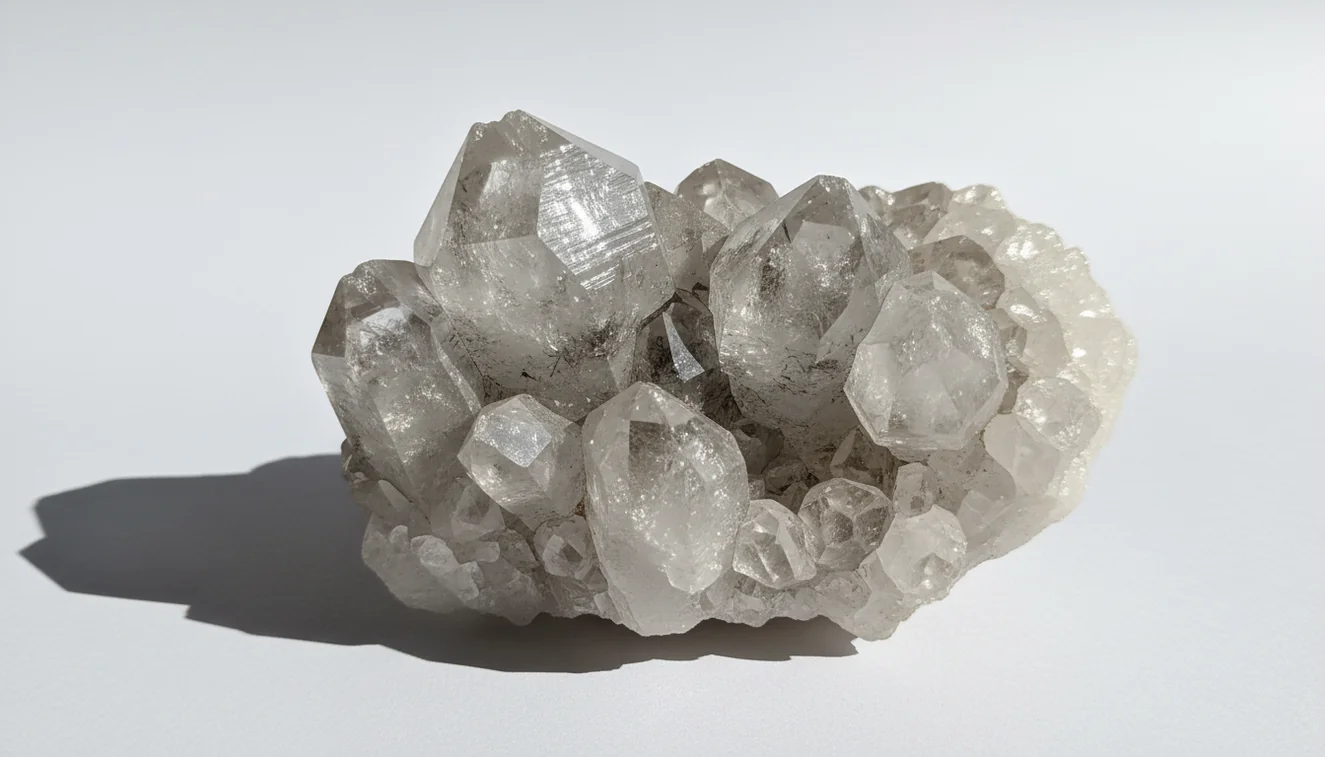
Gas bubbles trapped in cooling lava create hollow cavities. Over time, mineral-rich groundwater deposits crystals like quartz or calcite on the cavity walls, forming geodes.
How are rocks classified?
Geologists classify rocks by origin (igneous, sedimentary, metamorphic), then refine by mineral composition, grain size, and texture. The system connects a rock's appearance to its formation history.
Can apps identify rocks?
AI rock identifier apps perform well on common specimens like granite, basalt, sandstone, and marble. Accuracy depends on photo quality and specimen condition.
Rock vs stone?
There is no formal geological distinction. "Rock" is the scientific term for a natural aggregate of minerals, while "stone" is everyday language usually implying a smaller, handled piece.
Are river rocks valuable?
Most river rocks are common varieties with low individual value. However, river tumbling occasionally exposes agates, jasper, jade, or sapphire-bearing gravel depending on local geology.